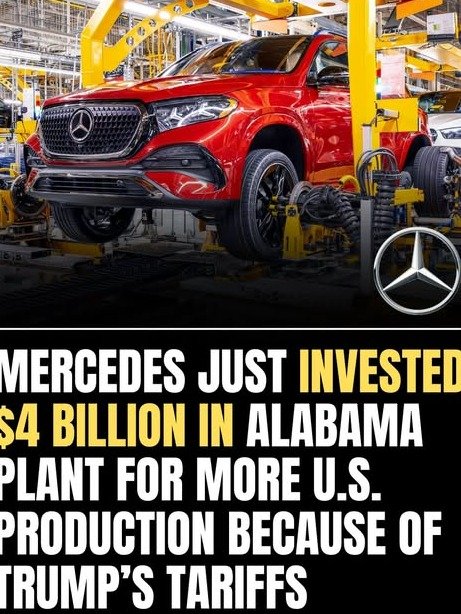
The global economy is undergoing a seismic shift, quietly reshaping industries and supply chains around the world. At the epicenter of this transformation, a familiar name — Mercedes-Benz — is making an unprecedented move, pouring billions into its Alabama operations, signaling a profound ‘Made in America’ resurgence that will impact everything from jobs to the cars we drive.
This isn’t just another corporate expansion; it’s a strategic pivot, a multi-billion dollar bet on American soil that reflects a new era of trade realities. Major manufacturers are no longer simply seeking the cheapest labor abroad. Instead, they are recalibrating their strategies, prioritizing resilience, stability, and domestic production in response to evolving geopolitical landscapes and consumer demands.
The Unfolding ‘Made in America’ Push
For decades, the global automotive industry thrived on complex, interconnected supply chains that spanned continents. Parts manufactured in one country would travel thousands of miles to be assembled in another, all in the pursuit of efficiency and cost reduction. However, recent events have exposed the inherent vulnerabilities of this model, prompting a dramatic rethink among industry giants.
The concept of ‘Made in America’ is experiencing a powerful renaissance, driven by a confluence of factors. From increasing calls for economic nationalism to the painful lessons learned from pandemic-induced supply chain disruptions, companies are recognizing the critical importance of localized production. This shift isn’t merely patriotic; it’s pragmatic, aiming to mitigate risks and ensure greater control over manufacturing processes.
Mercedes-Benz’s Bold Bet in Alabama
At the forefront of this manufacturing revolution is Mercedes-Benz, which has committed an astounding multi-billion dollar investment into its existing facilities in Vance, Alabama. This significant capital injection is primarily focused on accelerating the production of electric vehicles (EVs) and establishing a robust battery manufacturing infrastructure right here in the U.S.
The German luxury automaker’s decision to deepen its roots in Alabama is a testament to the state’s strategic advantages, including a skilled workforce, a supportive business environment, and excellent logistical capabilities. This investment underscores Mercedes’ long-term vision for North America as a key market for its next-generation electric fleet, reducing reliance on overseas imports for its critical components.
Why Alabama? A Hub for Automotive Innovation
Mercedes-Benz isn’t new to Alabama; its Vance plant has been a cornerstone of its global production network since 1997, producing iconic SUVs for worldwide export. However, this latest wave of investment marks a significant evolution, transforming the plant into a high-tech hub for electric vehicle manufacturing, including the EQS SUV and EQE SUV models.
The state of Alabama has proactively fostered an attractive ecosystem for automotive manufacturing through various incentives and workforce development programs. This collaborative approach between government and industry has created a fertile ground for growth, drawing not only automakers but also their crucial suppliers, further strengthening the local economy and creating a specialized talent pool.
Navigating the New Trade Reality: Tariffs and Beyond
The impetus behind this domestic manufacturing surge is deeply rooted in a new ‘trade reality’ where the cost of importing vehicles and components is on the rise. Tariffs, trade disputes, and geopolitical tensions have consistently added layers of complexity and expense to international commerce, making overseas production less predictable and more costly.
When imported vehicles become more expensive due due to these factors, companies face a critical choice: either absorb the increased costs and potentially lose market share, or localize production to circumvent these economic barriers. Mercedes’ move is a clear indication that for many, the latter is becoming the more attractive and sustainable long-term strategy, prioritizing stable supply over marginal cost savings from distant shores.
The Ripple Effect: Job Creation and Economic Boost
The impact of Mercedes’ multi-billion dollar investment extends far beyond the factory gates. This expansion is set to create hundreds of new, high-paying jobs in Alabama, ranging from skilled manufacturing roles to engineering and logistics positions. This influx of employment opportunities will provide a substantial boost to the local and state economies.
Moreover, the establishment of a domestic battery plant is a game-changer. It creates an entirely new segment of the automotive supply chain within the U.S., attracting ancillary businesses and further stimulating economic activity. This localization effort reduces vulnerabilities and fosters a more robust, self-sufficient manufacturing ecosystem, creating a powerful ripple effect across the region.
“Our plant in Alabama is a key pillar in our global production network, and we are proud to celebrate its transformation into a hub for electric vehicle manufacturing,” stated a Mercedes-Benz executive, highlighting the strategic importance of the U.S. operations.
Supply Chain Resilience: A Post-Pandemic Imperative
The COVID-19 pandemic served as a stark wake-up call for global manufacturers, exposing the fragility of extended supply chains. Factories ground to a halt due to distant lockdowns, and critical components, like semiconductors, became scarce, leading to production delays and significant financial losses across industries.
In response, companies are now placing a premium on supply chain resilience. Moving production closer to consumer markets, or ‘reshoring,’ significantly reduces transit times, minimizes logistical complexities, and provides greater control over the entire manufacturing process. This strategic shift is about building redundancy and robustness, ensuring that unforeseen global events are less likely to disrupt production.
Beyond Mercedes: A Broader Industry Trend
While Mercedes’ investment is a prominent example, it’s part of a much larger trend. Other major automakers, including BMW, Hyundai, and Toyota, have also made significant commitments to expanding or establishing EV and battery production in the American South. This collective movement signals a fundamental realignment of the global automotive manufacturing landscape.
This shift isn’t just about assembling cars; it’s about localizing the entire value chain, from raw material processing to advanced battery cell production. It represents a long-term commitment to developing a comprehensive domestic ecosystem for electric mobility, creating new industries and revitalizing old manufacturing towns.
What This Means for Consumers and the Future
For consumers, this ‘Made in America’ push could translate into several benefits. While the immediate impact on vehicle prices might vary, a more stable and localized supply chain could lead to greater availability of popular models and potentially faster delivery times. Furthermore, it reinforces the quality and reliability associated with domestically produced goods.
Looking ahead, this manufacturing revolution heralds a future where American factories play an increasingly central role in producing cutting-edge technologies. It’s a testament to the nation’s enduring industrial strength and its capacity to adapt and innovate in the face of global challenges. The billions flowing into states like Alabama are not just investments in factories; they are investments in the future of American ingenuity and economic independence.
Embracing the Electric Future, Made in America
Mercedes-Benz’s multi-billion dollar commitment to Alabama is more than just a headline; it’s a powerful symbol of a transformative era. It signifies a future where luxury electric vehicles, equipped with domestically produced batteries, roll off assembly lines in the heart of America. This monumental shift is reshaping global trade, strengthening domestic economies, and securing a more resilient future for manufacturing in the United States.
As the ‘Made in America’ push continues to gain momentum, expect to see more companies follow suit, investing in local production and solidifying the nation’s position as a leader in advanced manufacturing. The billions being funneled into states like Alabama are truly just the beginning of what promises to be an exciting and economically empowering revolution.
About the Author




