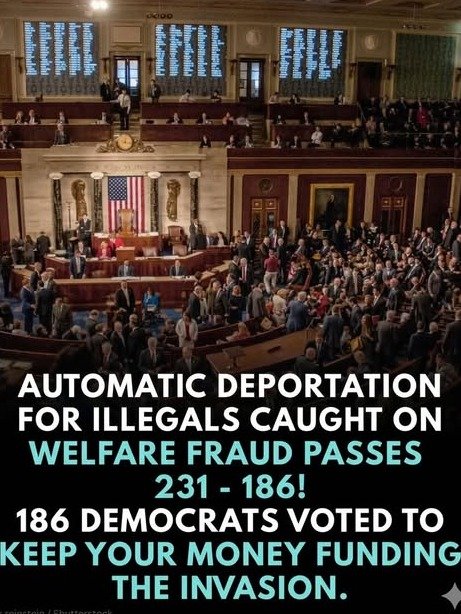
A seismic shift is underway in Washington, D.C., and it directly impacts the future of social welfare programs and immigration enforcement in the United States. The House of Representatives has just taken a significant step forward with H.R. 1958, a bill that has garnered considerable attention and robust backing from prominent figures, including former President Donald Trump. But what exactly does this legislation entail, and why should every American be paying close attention?
This isn’t just another piece of legislation; it’s a potential game-changer. H.R. 1958 aims to tighten the reins on who can access welfare benefits while simultaneously strengthening immigration enforcement measures. For many, it represents a crucial move to protect taxpayer dollars and uphold the integrity of the nation’s social safety net. For others, it raises profound questions about equity, access, and the very definition of compassion in public policy.
The Core of H.R. 1958: Unpacking Its Dual Focus
At its heart, H.R. 1958 seeks to address two interconnected areas: welfare fraud and immigration enforcement. The bill’s proponents argue that by implementing stricter eligibility requirements and enhancing verification processes, it can significantly reduce instances of fraud within various federal assistance programs. This measure is positioned as a safeguard, ensuring that benefits are directed only to those who genuinely qualify and are legally entitled to receive them.
Simultaneously, the legislation weaves in provisions designed to bolster immigration enforcement. This often means linking an individual’s immigration status more directly to their eligibility for public benefits. The underlying premise is that a more stringent approach to benefit distribution will discourage illegal immigration and encourage adherence to existing immigration laws.
Why the Push for Stricter Welfare Controls?
The conversation around welfare fraud is not new, but H.R. 1958 brings it back to the forefront with renewed vigor. Supporters of the bill often highlight the immense financial burden that fraudulent claims place on taxpayers. They contend that every dollar diverted through fraud is a dollar less for legitimate recipients or other essential public services.
Arguments for the bill frequently cite the need for accountability and transparency. They suggest that current systems may be too permissive, making it easier for individuals to exploit loopholes or make false claims. By introducing more rigorous verification methods, the bill aims to create a more secure and efficient system, ultimately restoring public trust in welfare programs.
“Our welfare programs are designed to help those truly in need, not to be exploited. This bill is a critical step towards protecting taxpayer dollars and ensuring the integrity of our social safety net for all Americans.” – A proponent of H.R. 1958.
Immigration Enforcement: A Deeper Dive
The immigration component of H.R. 1958 is equally significant, reflecting a broader political movement towards tighter border security and more rigorous internal enforcement. The bill proposes mechanisms that would make it more difficult for undocumented immigrants, or even those with certain legal statuses, to access a range of public benefits.
This approach is rooted in the idea that access to welfare programs can act as a “pull factor” for illegal immigration. By limiting this access, the bill’s advocates hope to deter individuals from entering or remaining in the U.S. unlawfully. It’s a strategy that aligns with past efforts to make the U.S. less attractive to those without legal status, often referred to as “attrition through enforcement.”
Donald Trump’s Endorsement: What It Means
The backing of former President Donald Trump adds considerable weight and political significance to H.R. 1958. Throughout his presidency, Trump consistently advocated for policies that prioritized “America First,” which included strict immigration controls and a critical stance on welfare programs. His endorsement signals that this bill is in line with a key part of the conservative agenda.
Trump’s support galvanizes a specific segment of the electorate and congressional Republicans, making the bill a litmus test for those aligned with his political philosophy. It transforms H.R. 1958 from a routine piece of legislation into a prominent battleground in the ongoing culture wars surrounding immigration and government spending.
Navigating the Legislative Labyrinth: What Happens Next?
The House’s advancement of H.R. 1958 is a crucial milestone, but it’s far from the finish line. The legislative process is complex and fraught with potential obstacles. After passing the House, the bill must then move to the Senate, where it will face another round of scrutiny, debate, and potential amendments. The Senate, with its different political dynamics and procedural rules, could prove to be a more challenging environment for the bill’s passage.
If H.R. 1958 successfully navigates the Senate, it would then be sent to the President’s desk for signature. Given the current political landscape, the bill’s fate will largely depend on the level of bipartisan support it can muster, or the political will of the party in power to push it through.
Arguments FOR H.R. 1958: Protecting Taxpayer Interests
- Fiscal Responsibility: Supporters argue the bill will save billions of taxpayer dollars by preventing fraud and ensuring benefits go only to eligible citizens and legal residents.
- Program Integrity: It aims to restore public trust in welfare programs by making them more secure and less susceptible to abuse.
- Deterrent to Illegal Immigration: By limiting access to public benefits, proponents believe it will reduce incentives for individuals to enter or remain in the country unlawfully.
- Fairness to Legal Immigrants: Some argue it creates a more equitable system, as legal immigrants often wait years for their status and follow established rules.
These points resonate strongly with voters concerned about government spending and the perceived strain on public resources. The narrative often centers on the idea of prioritizing citizens and those who have followed legal pathways.
Arguments AGAINST H.R. 1958: Concerns for Vulnerable Populations
While the bill’s intentions are framed as positive by its supporters, opponents raise serious concerns about its potential negative impacts. Critics argue that H.R. 1958 could lead to increased hardship for vulnerable populations, including families with mixed immigration statuses, children, and those genuinely in need.
One primary concern is the potential for “chilling effects.” Even legal residents or citizens in immigrant families might fear applying for benefits they are entitled to, out of concern that it could jeopardize their loved ones’ immigration status or draw unwanted attention. This could lead to a rise in poverty, hunger, and a decline in public health outcomes for these communities.
“This bill isn’t about fraud; it’s about making life harder for immigrant families and denying basic necessities to those who contribute to our society. We cannot allow fear to dictate our compassion.” – An opponent of H.R. 1958.
Furthermore, opponents contend that the bill could create significant administrative burdens and costs for agencies tasked with implementing the new verification processes. The complexity of determining immigration status and eligibility across various programs could lead to delays, errors, and increased bureaucracy, potentially costing more than any savings from reduced fraud.
Historical Context: Welfare Reform and Immigration
The debate surrounding H.R. 1958 is not occurring in a vacuum. It echoes historical discussions about welfare reform and the role of immigrants in society. The 1996 welfare reform act, for instance, significantly restricted access to federal benefits for many legal immigrants, a move that sparked similar heated debates.
These past legislative efforts highlight a recurring tension between the desire to control public spending and the humanitarian imperative to provide a safety net for all residents, regardless of their background. H.R. 1958 represents another chapter in this long-standing policy struggle.
Potential Societal Impacts: Beyond the Bill Itself
The implications of H.R. 1958 extend far beyond the immediate changes to welfare eligibility and immigration enforcement. If passed, the bill could profoundly impact various facets of American society:
- Public Health: Families fearing deportation or benefit denial may avoid seeking necessary medical care, leading to broader public health challenges.
- Child Poverty: Children, particularly those with undocumented parents, could face increased poverty and food insecurity if their families lose access to critical support.
- Economic Contributions: Immigrants, including many who would be affected by this bill, contribute significantly to the U.S. economy through labor and taxes. Restricting their access to basic services could negatively impact their ability to thrive and contribute.
- Community Trust: Increased enforcement measures and fear of government interaction could erode trust between immigrant communities and local authorities, including law enforcement.
These potential ripple effects underscore the far-reaching consequences of legislation that touches upon such fundamental issues as human dignity and economic stability.
The Road Ahead: Stay Informed and Engaged
As H.R. 1958 continues its journey through Congress, it will undoubtedly remain a subject of intense debate and public scrutiny. Its advancement through the House signals a strong intent from a segment of lawmakers to push for significant changes in how the nation manages its welfare programs and enforces immigration laws.
For citizens and residents alike, understanding the nuances of this bill is paramount. It’s a reminder that legislative decisions made in Washington have tangible, real-world consequences for communities across the country. Staying informed, engaging in civil discourse, and making your voice heard are crucial steps as this vital piece of legislation moves forward.
Conclusion: A Crossroads for American Policy
H.R. 1958 represents a critical juncture in American public policy, embodying deeply held beliefs about fiscal responsibility, national sovereignty, and social justice. Its dual focus on welfare fraud and immigration enforcement touches upon some of the most contentious issues of our time. Whether it ultimately becomes law, and what its final form will be, remains to be seen.
What is clear, however, is that this bill demands our attention. Its potential to reshape the lives of millions and redefine the parameters of America’s social contract makes it a legislative development that no one can afford to ignore. The debate is ongoing, and its outcome will undoubtedly leave a lasting mark on the nation.
About the Author




