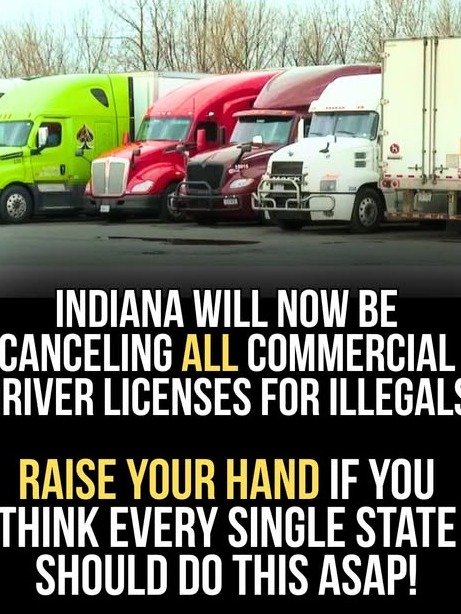
A silent battle is escalating across the United States, and Indiana has just fired a significant shot. What seems like a localized policy change regarding commercial driver licenses (CDLs) for undocumented individuals is, in fact, a powerful new front in the nation’s ongoing, often heated, immigration debate. This isn’t just about who can drive a truck; it’s about the very fabric of state sovereignty, economic stability, and the future of immigration policy.
The Hoosier State is making a bold legislative move, aiming to explicitly prohibit those in the country without legal authorization from obtaining or renewing commercial driver licenses. This decision has ignited intense discussions, drawing both fervent support and strong opposition, as it touches upon issues of public safety, the labor market, and fundamental human rights. Understanding the nuances of this policy, and its potential ripple effects, is crucial for every citizen.
The New Legislation: What Indiana is Doing
Indiana’s recent legislative efforts are designed to solidify state control over who qualifies for a commercial driver’s license. The proposed or enacted measures specifically target individuals residing in the U.S. without legal status, effectively barring them from operating commercial vehicles within the state. This initiative marks a definitive stance, reinforcing the idea that state resources and privileges should be reserved for legal residents.
Proponents argue that this move aligns Indiana with federal immigration enforcement principles and enhances public safety by ensuring all commercial drivers undergo thorough background checks and are legally authorized to work. The legislation is not merely a bureaucratic adjustment; it represents a philosophical pivot, emphasizing a stricter approach to immigration matters at the state level. It’s a clear signal from Indiana’s lawmakers about their commitment to what they perceive as border integrity and the rule of law.
The Rationale Behind the Move
The primary motivations driving Indiana’s decision are multifaceted. At its core, the legislation aims to uphold the principle that legal residency should be a prerequisite for holding a commercial driver’s license. Lawmakers often cite concerns about national security and the integrity of state-issued identification documents when discussing such measures. They believe that allowing undocumented individuals to obtain CDLs could inadvertently create vulnerabilities or undermine the legal framework.
Furthermore, there’s a strong argument made about public safety. Advocates for the ban contend that ensuring all commercial drivers are legally vetted reduces risks on the road, as it allows for more stringent background checks and accountability. This perspective suggests that undocumented drivers might be less traceable or less inclined to report incidents, though concrete evidence to support these claims is often debated. The underlying sentiment is often rooted in a desire for greater control and order within the state’s transportation sector.
Public Safety vs. Economic Reality
While public safety is a significant concern for proponents of the ban, opponents argue that such measures might inadvertently create new safety hazards. If undocumented individuals who are already working in commercial driving roles are suddenly unable to obtain legal licenses, they might continue to drive without proper documentation or training, potentially increasing the number of uninsured and unvetted drivers on the road. This could lead to a paradox where a policy intended to enhance safety actually undermines it.
Moreover, the trucking industry, both in Indiana and nationwide, faces persistent labor shortages. Commercial drivers are the backbone of supply chains, ensuring goods reach consumers and businesses. Restricting access to CDLs for a segment of the workforce, even if undocumented, could exacerbate these shortages, leading to increased shipping costs, delays, and broader economic disruptions. The practical reality of many industries relies on a diverse labor pool, and this legislation could directly impact that.
“The unintended consequences of these laws can be far-reaching,” stated an industry analyst. “We risk pushing skilled drivers underground rather than integrating them into a regulated, safer system. The goal should be to improve safety for everyone, not just create new problems.”
The Ripple Effect: Impact on Indiana’s Economy
Indiana boasts a robust logistics and transportation sector, heavily reliant on a steady supply of commercial drivers. The state’s strategic location, often referred to as the ‘Crossroads of America,’ makes its trucking industry vital for regional and national commerce. A significant reduction in the available pool of CDL holders could send shockwaves through this crucial economic pillar, affecting everything from agricultural exports to manufacturing supply lines.
Businesses that depend on timely and efficient transportation services could face higher operational costs as they struggle to find drivers. This could, in turn, lead to increased prices for consumers and potentially force some businesses to reconsider their operations within the state. The economic ramifications extend beyond just the trucking companies themselves, touching every sector that relies on the movement of goods, which is virtually all of them.
A Deeper Dive into the National Immigration Debate
Indiana’s move is not an isolated incident but rather a microcosm of a much larger, nationwide struggle over immigration policy. States across the country are increasingly taking matters into their own hands, enacting laws that either restrict or expand rights for undocumented immigrants, often in direct response to perceived federal inaction or differing political ideologies. This creates a patchwork of regulations that can be confusing and challenging to navigate.
Some states have moved in the opposite direction, allowing undocumented residents to obtain standard driver’s licenses, arguing that it improves road safety by ensuring all drivers are tested and insured, regardless of status. These contrasting approaches highlight the deep divisions within the country regarding how to address the presence of undocumented immigrants and their integration into society. Each state’s decision contributes to the ongoing national dialogue, shaping public opinion and political discourse.
Key Points of the National Debate:
- State vs. Federal Authority: The ongoing tension over whether immigration enforcement is primarily a federal or state responsibility.
- Economic Contributions: The role of undocumented workers in various industries and their impact on local economies.
- Public Safety Concerns: Differing views on whether restricting licenses enhances or detracts from overall road safety.
- Humanitarian Aspects: The ethical considerations of denying essential services or privileges based on immigration status.
Voices of Opposition and Concerns
The legislative push in Indiana has predictably drawn strong criticism from immigrant advocacy groups, civil rights organizations, and some business associations. Opponents argue that such bans are not only discriminatory but also counterproductive. They emphasize that denying legal driving privileges pushes individuals further into the shadows, making them more vulnerable to exploitation and less likely to interact with law enforcement in a positive manner.
Moreover, critics point out that many undocumented immigrants are essential workers who contribute significantly to the economy, paying taxes and filling vital labor gaps. By restricting their ability to obtain CDLs, Indiana risks alienating a crucial segment of its workforce and potentially driving them to other states with more inclusive policies. This could result in a net loss for the state, both economically and socially, without achieving the intended public safety benefits.
Legal Landscape and Potential Challenges
The legal precedent for state-level immigration policies is complex and often contested. While states generally have the authority to regulate who receives a driver’s license, these regulations must not infringe upon federal immigration law or constitutional rights. Similar laws in other states have faced legal challenges, with outcomes varying depending on the specific wording of the statute and the prevailing legal interpretations.
Indiana’s new measure could potentially face lawsuits arguing that it oversteps state authority, discriminates against a specific group, or violates constitutional protections. Such legal battles can be protracted and costly, adding another layer of complexity to an already contentious issue. The ultimate fate of this legislation may well be decided in the courts, shaping the future legal landscape for immigration policy at the state level.
Beyond the Wheel: The Human Element
At the heart of this policy debate are real people and families. For many undocumented immigrants, a commercial driver’s license isn’t just a convenience; it’s a lifeline. It represents the ability to earn a living wage, support their families, and contribute to their communities. Denying this opportunity can have devastating personal consequences, forcing individuals into precarious situations and exacerbating existing socio-economic challenges.
The impact extends beyond the individual driver to their families and dependents, many of whom may be U.S. citizens. Restrictive policies can create a climate of fear and uncertainty, making it harder for these families to thrive and integrate. Understanding the human dimension of these policies is crucial for a complete and empathetic assessment of their true costs and benefits.
What Comes Next? The Future of State Immigration Laws
Indiana’s decision to block commercial driver licenses for undocumented individuals is a significant development that will undoubtedly influence similar debates in other states. It reflects a growing trend of states asserting their authority on immigration matters, often in the absence of comprehensive federal reform. This decentralized approach leads to a fragmented legal and social environment for immigrants across the nation.
The coming months and years will reveal the true economic, social, and legal impacts of Indiana’s policy. Will it achieve its stated goals of enhanced public safety and stronger rule of law? Or will it lead to unforeseen consequences, exacerbating labor shortages and creating new challenges for a vulnerable population? The answers to these questions will not only shape Indiana’s future but also contribute to the broader narrative of immigration in America.
This is a pivotal moment, and the outcome of Indiana’s bold stance will be watched closely by policymakers, industry leaders, and communities nationwide. It underscores the urgent need for a coherent, compassionate, and economically sound national immigration strategy that addresses the complex realities of our modern world.
About the Author




