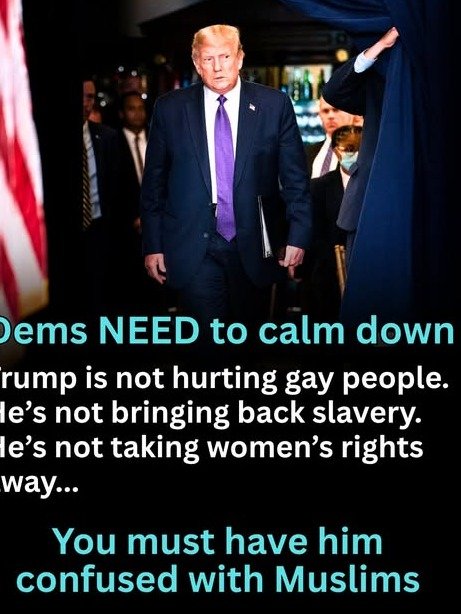
Have you ever felt completely drained by the news, like every single political headline screams disaster? You’re not alone. A growing number of Americans are experiencing profound fatigue from what can only be described as ‘panic politics,’ especially concerning the discourse surrounding Donald Trump.
It seems every policy disagreement, every public statement, and every political skirmish is immediately framed as an existential threat, a historic turning point, or the end of democracy as we know it. This relentless, high-stakes rhetoric has created a climate of constant anxiety, leaving many citizens exhausted and disengaged.
The Relentless Drumbeat of Doom
For years now, the political landscape has been dominated by a near-constant state of alarm. Whether it’s the media, political opponents, or even supporters, the language used to describe Donald Trump and his actions often escalates quickly to apocalyptic warnings. What might once have been a robust policy debate is now frequently portrayed as a battle for the soul of the nation.
This isn’t just about partisan bickering; it’s about the pervasive use of hyperbole that elevates every issue to an emergency. From economic policies to judicial appointments, from international relations to domestic legislation, the narrative consistently suggests that the stakes couldn’t possibly be higher, and failure means irreversible catastrophe.
The Psychological Toll of Constant Crisis
Imagine living in a perpetual state of emergency. That’s precisely what this brand of ‘panic politics’ inflicts on the public. Our brains are wired to react to genuine threats with a fight-or-flight response, but when every news cycle presents a new ‘end-of-the-world’ scenario, that system becomes overloaded.
The result is a widespread sense of anxiety, stress, and even despair. People become emotionally numb, desensitized to actual important issues because their capacity for concern has been stretched to its breaking point. This constant fear-mongering can lead to burnout, making it harder for individuals to engage constructively or even care about the political process.
“When everything is an emergency, nothing is. The public’s capacity for alarm is finite, and we’re seeing the consequences of overdrawing from that account.”
Desensitization and Disengagement
One of the most insidious effects of ‘panic politics’ is desensitization. When dire warnings become the norm, they lose their impact. If every election is portrayed as the last chance to save democracy, or every piece of legislation as an assault on fundamental rights, the public eventually tunes out.
This creates a dangerous cycle: politicians and media outlets feel they need to shout even louder to be heard, further escalating the rhetoric, while the public becomes increasingly apathetic. Important issues that genuinely warrant attention get lost in the noise, as people grow weary of the emotional manipulation.
Who Benefits from the Fear-Mongering?
It’s crucial to ask who gains from this constant state of political panic. For some politicians, framing every issue as an existential threat can be a powerful tool to galvanize their base, raise funds, and demonize opponents. It simplifies complex issues into clear-cut good vs. evil narratives, which can be effective in rallying support.
Media outlets also play a significant role. Sensational headlines and crisis-driven reporting often generate more clicks, views, and engagement. The ‘if it bleeds, it leads’ mentality extends to political news, where drama and conflict are prioritized over nuanced analysis, further fueling the panic cycle.
Erosion of Nuance and Productive Dialogue
When the political discourse is dominated by ‘end-of-the-world’ language, there’s little room for nuance, compromise, or even respectful disagreement. Complex problems that require thoughtful solutions are reduced to ideological battles, where one side is inherently good and the other inherently evil.
This binary thinking makes it incredibly difficult to find common ground or to engage in the kind of collaborative problem-solving that a healthy democracy requires. Instead of seeking solutions, the focus shifts to defeating the ‘enemy,’ further deepening partisan divides and making constructive dialogue almost impossible.
Beyond Trump: A Broader Trend Accelerated
While the focus here is on the rhetoric surrounding Donald Trump, it’s important to acknowledge that ‘panic politics’ is a broader trend that predates him and extends beyond his figure. However, his presidency and the reactions to it have undoubtedly amplified this phenomenon to unprecedented levels.
The rise of social media, with its algorithms favoring emotionally charged content, has also played a critical role in disseminating and intensifying this type of rhetoric. Echo chambers reinforce existing beliefs and amplify fears, making it harder for individuals to encounter diverse perspectives or moderate voices.
Reclaiming Sanity: What Can Be Done?
So, what can be done to break free from this cycle of ‘panic politics’? It requires a conscious effort from multiple fronts. For citizens, it means being more discerning consumers of news and information, actively seeking out diverse sources, and questioning overly dramatic narratives.
- Seek Nuance: Look for reporting that explains complexities rather than simplifying them into good vs. evil.
- Limit Exposure: Take breaks from the news cycle to protect your mental well-being.
- Engage Locally: Focus energy on local issues where your actions can have a more direct and tangible impact.
- Demand Better: Support media outlets and politicians who prioritize facts, reasoned debate, and constructive solutions over sensationalism.
For politicians and media, it means recognizing the long-term damage this constant alarmism inflicts on civic society. It requires a commitment to responsible reporting and leadership that prioritizes truth and national well-being over short-term gains or ratings.
Moving Towards a More Measured Discourse
The fatigue with ‘panic politics’ is a clear signal that Americans are craving a more measured, thoughtful, and less emotionally manipulative approach to public discourse. While the stakes in politics are indeed high, not every disagreement is an existential crisis, and not every opponent is an enemy of the state.
It’s time to dial down the rhetoric, reintroduce nuance, and foster an environment where people can discuss challenging issues without feeling constantly bombarded by doomsday predictions. Only then can we move past the exhaustion and engage more productively in building a stronger, more unified nation.
About the Author




