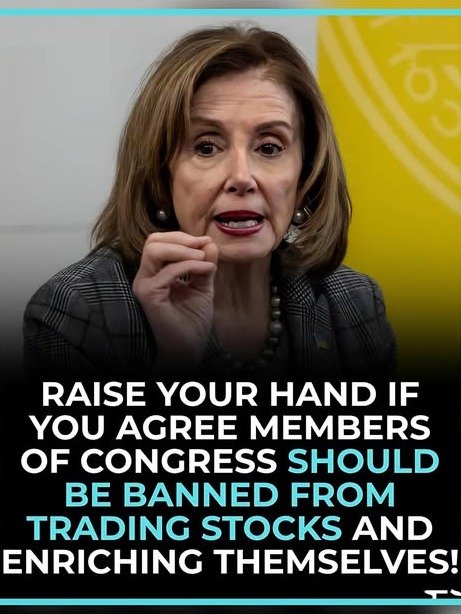
Imagine a scenario where the very individuals crafting laws that shape our economy are also actively trading stocks, potentially benefiting directly from the policies they influence. This isn’t a hypothetical thought experiment; it’s the unsettling reality at the heart of a rapidly escalating national debate. Growing concerns about stock trading by members of Congress have ignited a fierce demand for reform, pushing the issue to the forefront of American political discourse.
For many citizens, the idea of elected officials engaging in personal stock market transactions while simultaneously legislating on matters that affect entire industries creates an undeniable perception of conflict. It begs a critical question: are our lawmakers truly focused solely on serving the public good, or is there an inherent temptation to leverage privileged information for personal financial gain? This tension between public duty and private profit is eroding faith in the integrity of our democratic institutions.
The Unsettling Reality: A Crisis of Trust
The core of this controversy lies in the fundamental principle of public service. Americans elect representatives to advocate for their interests, to make decisions that benefit the nation as a whole, and to uphold the highest ethical standards. When reports surface detailing significant stock trades by members of Congress or their spouses, particularly around key legislative moments or economic shifts, it inevitably raises eyebrows and fuels suspicions.
The potential for insider trading, or at the very least, trading based on information not yet available to the general public, is a grave concern. Lawmakers have access to classified briefings, participate in closed-door committee meetings, and are privy to upcoming policy changes long before Main Street investors. This informational asymmetry creates an unfair advantage, making it difficult for the public to believe that every trade is purely coincidental or based solely on publicly available data.
Understanding the Conflict of Interest
A conflict of interest arises when an individual’s personal interests — in this case, financial gain through stock trading — could potentially influence their professional judgment or actions in their official capacity. For a member of Congress, this could mean voting on a bill that directly impacts a company whose stock they own, or delaying legislation that might negatively affect their portfolio.
Consider a legislator who holds significant shares in a pharmaceutical company while sitting on a committee that oversees healthcare policy. Or a representative with investments in the defense sector who votes on military spending bills. Even if no explicit wrongdoing occurs, the appearance of such a conflict can be just as damaging to public trust as actual malfeasance. It fosters cynicism and a belief that the system is rigged.
Existing Rules: The STOCK Act and Its Limitations
In response to previous concerns, Congress passed the Stop Trading on Congressional Knowledge (STOCK) Act in 2012. This bipartisan law aimed to combat insider trading by members of Congress and other government officials. It explicitly affirmed that federal insider trading laws apply to them and required timely public disclosure of stock transactions by lawmakers, their spouses, and dependent children.
However, despite its intentions, many critics argue the STOCK Act hasn’t gone far enough. The law primarily focuses on disclosure, not prevention. While it mandates that trades be reported within 45 days, this period still allows for significant potential for abuse before the public is even aware of the transaction. Furthermore, enforcement has been criticized as lax, with numerous instances of late disclosures or even failures to report trades entirely, often resulting in minimal penalties.
“The STOCK Act was a step in the right direction, but it’s clearly insufficient,” states one prominent ethics watchdog. “Disclosure alone doesn’t eliminate the conflict; it merely reveals it after the fact. We need a system that prevents these conflicts from arising in the first place.”
The Growing Chorus for Stricter Reforms
The past few years have seen a surge in public and political pressure for more stringent rules. High-profile cases, particularly during the early days of the COVID-19 pandemic when some lawmakers made timely stock trades after receiving private briefings on the virus’s potential impact, intensified the outrage. These incidents brought the issue into sharp focus, making it a regular topic of discussion across news outlets and social media platforms.
A broad coalition of advocacy groups, ethics organizations, and even a growing number of lawmakers themselves are now calling for a complete overhaul. Their central argument is simple: to fully restore public trust, members of Congress should not be permitted to trade individual stocks while in office. This isn’t just about preventing illegal insider trading; it’s about eliminating the perception of impropriety that undermines faith in government.
- Eliminating the Perception of Impropriety: A ban would send a clear message that public service is paramount.
- Leveling the Playing Field: It would ensure lawmakers aren’t benefiting from information unavailable to average citizens.
- Restoring Public Trust: A visible commitment to ethical governance is crucial for a healthy democracy.
- Focus on Public Service: Lawmakers could dedicate their full attention to legislative duties without financial distractions.
Proposed Solutions: From Blind Trusts to Outright Bans
Several solutions have been proposed to address the issue, ranging in severity and scope. One popular suggestion is the mandatory use of qualified blind trusts. Under this arrangement, a lawmaker’s assets would be managed by an independent third party without the lawmaker’s knowledge of the specific investments. This theoretical separation would prevent conflicts of interest, as the official would have no control over their portfolio.
However, blind trusts are often criticized for not being truly “blind” in practice, especially for high-profile individuals who can infer their holdings. They are also complex and costly to establish. Another alternative is to require lawmakers to invest solely in diversified exchange-traded funds (ETFs) or mutual funds, which are less susceptible to manipulation through specific policy decisions.
The most far-reaching proposal, and the one gaining the most traction, is an outright ban on individual stock trading for members of Congress and their immediate families. This approach would prohibit officials from buying or selling individual company stocks, forcing them to divest existing holdings or place them into diversified funds or truly blind trusts. Several bipartisan bills have been introduced in both the House and Senate to achieve this.
The Debate: Arguments For and Against a Ban
While the arguments for a ban on congressional stock trading are compelling, there are also counterarguments, primarily centered on individual freedom and the practicalities of implementation. Opponents of a ban often contend that restricting personal financial activity is an infringement on a lawmaker’s rights as a private citizen.
They argue that elected officials should not be treated differently from other Americans, and that a blanket ban could discourage qualified individuals from seeking public office. Furthermore, some suggest that the existing disclosure rules, if properly enforced, are sufficient to deter wrongdoing. They might also point out that managing complex family finances or divesting holdings can be burdensome.
However, proponents of a ban argue that public service comes with unique responsibilities and a higher ethical bar. The privilege of serving the nation outweighs any perceived infringement on personal financial freedom. They emphasize that the critical goal is to eliminate even the appearance of corruption and rebuild the public’s shattered confidence in government.
Real-World Implications: Who Benefits?
The current system, where lawmakers can trade individual stocks, arguably benefits those who are already in positions of power and influence. It creates an uneven playing field where ordinary investors operate with significantly less information. This disparity can breed resentment and reinforce the narrative that Washington D.C. operates under a different set of rules than the rest of the country.
When the public perceives that their representatives are more concerned with their personal portfolios than with the welfare of their constituents, it undermines the very foundation of representative democracy. It makes citizens question whether legislative decisions are truly made in the public interest or subtly swayed by personal financial considerations.
Ultimately, the beneficiaries of reform would be the American people. A ban on congressional stock trading would represent a significant step towards a more transparent, ethical, and trustworthy government. It would help ensure that lawmakers are indeed focused solely on serving the public, free from the distractions and temptations of personal financial gain.
The Path Forward: Restoring Faith in Government
The momentum for reform is undeniable. Public opinion polls consistently show overwhelming support for stricter rules, including outright bans. This bipartisan consensus underscores the urgency of the issue and the depth of public frustration. Lawmakers across the political spectrum are feeling the pressure to act, and bills are actively being debated in Congress.
The challenge lies in overcoming political inertia and vested interests. While many individual members of Congress support reform, passing comprehensive legislation requires collective will. The debate is not just about specific rules; it’s about defining the ethical boundaries of public service in the 21st century and demonstrating a commitment to integrity.
For citizens, staying informed and continuing to advocate for these reforms is crucial. By demanding transparency and accountability, the public can hold their representatives’ feet to the fire and push for meaningful change. The future of public trust in government may well depend on how Congress chooses to address this critical issue.
In conclusion, the growing concerns surrounding stock trading in Congress are more than just political talking points; they represent a fundamental challenge to the integrity of our democratic system. The calls for reform are not merely about preventing illegal acts but about restoring the essential trust between the governed and those who govern. It’s time for a clear, decisive action that puts public service unequivocally above private profit.
About the Author




