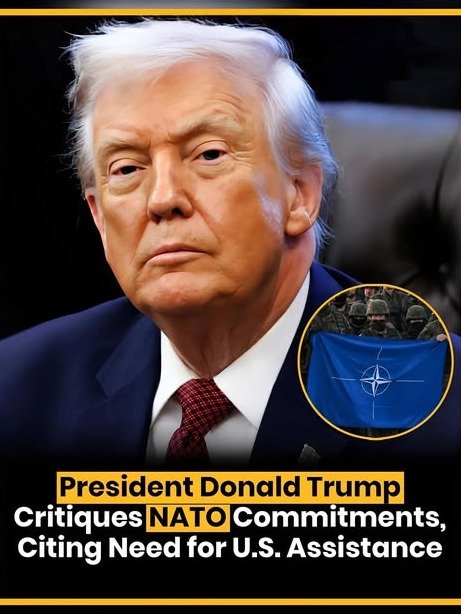
The whispers have turned into roars. Donald Trump’s insistent push for NATO allies to significantly boost their financial contributions isn’t just a political talking point; it’s a stark ultimatum that could redefine the bedrock of Western defense and collective responsibility. What if the ‘free ride’ is truly over, and what are the profound implications for global stability?
For years, the call has echoed across the Atlantic: NATO allies must increase their defense spending. Yet, when a figure like Donald Trump amplifies this demand, it transforms from a routine diplomatic talking point into a seismic political event, prompting urgent questions about the very future of collective security and the transatlantic alliance.
Understanding the 2% Pledge: A Decade-Old Commitment
At the heart of this ongoing debate lies a crucial, yet often overlooked, commitment: the 2% of GDP defense spending target. This benchmark isn’t a new invention; it was formally agreed upon by all NATO members at the Wales Summit in 2014, following Russia’s annexation of Crimea. The goal was clear: to ensure that all allies were contributing adequately to their collective defense and readiness.
This pledge isn’t merely about writing bigger checks; it’s about ensuring military capabilities are maintained and enhanced to meet evolving threats. It’s a measure of each nation’s commitment to the alliance and its ability to act when called upon. The target was set to be met by 2024, a deadline that is now upon us, intensifying the scrutiny.
Trump’s Stance: Calling Out the ‘Free Riders’
Donald Trump has consistently articulated a strong, often controversial, stance on NATO burden-sharing. His core argument revolves around the idea that many European allies have not been pulling their weight, effectively relying on the United States to shoulder an disproportionately large share of the defense burden. He views this as an unfair arrangement, often referring to these nations as ‘free riders’.
His rhetoric, while sometimes jarring to traditional diplomatic ears, has undeniably forced a conversation that many believed was long overdue. He has made it clear that continued U.S. commitment to NATO is, in his view, contingent on allies demonstrating a tangible increase in their contributions. This isn’t just a suggestion; it’s presented as a fundamental condition.
The Economic and Geopolitical Imperatives for Increased Spending
Beyond Trump’s direct appeals, there are compelling geopolitical reasons why increased defense spending has become a critical issue. The global security landscape has shifted dramatically since the end of the Cold War. Russia’s ongoing aggression in Ukraine, the rise of China as a military power, and persistent threats from terrorism and cyber warfare demand a robust and unified response.
Many argue that the economic prosperity enjoyed by many European nations should naturally translate into greater investment in their own security. Relying heavily on one ally, even one as powerful as the United States, can create vulnerabilities and imbalances that undermine the collective strength of the alliance.
The Realities on the Ground: Meeting the Target
While the 2% target was established in 2014, progress has been varied. Initially, only a handful of nations consistently met or exceeded this benchmark. The U.S., UK, and Poland were often among the few. However, Trump’s pressure, combined with the stark reality of renewed conflict in Europe, has spurred significant movement.
Recent data indicates a growing number of NATO members are now meeting or are on track to meet the 2% threshold. Nations like Germany, which historically lagged, have announced substantial increases in their defense budgets, signaling a significant shift in national priorities. This demonstrates that political will, often catalyzed by external pressure, can indeed lead to concrete action.
Arguments and Challenges for European Allies
However, increasing defense spending isn’t without its challenges for European nations. Many face domestic pressures to prioritize social programs, healthcare, and education. Shifting funds to defense can be politically unpopular, especially in countries with strong pacifist sentiments or a history of lower military engagement.
Furthermore, some argue that contributions to collective security aren’t solely financial. Nations contribute troops, specialized equipment, intelligence, and host crucial military infrastructure. These non-monetary contributions, while vital, are often harder to quantify in the simple 2% GDP metric, leading to a sense of being unfairly judged by some allies.
“The debate over defense spending isn’t just about numbers; it’s about the very soul of the alliance. It forces us to confront what collective security truly means in the 21st century,” explains one defense analyst. “It’s a complex tapestry of financial commitments, strategic contributions, and shared values.”
The Impact of Trump’s Rhetoric on Alliance Cohesion
Trump’s direct and sometimes confrontational approach has certainly ruffled feathers within NATO. Critics argue that his questioning of Article 5 – the collective defense clause – and his suggestions of potentially abandoning allies who don’t pay enough could undermine the very principle of collective security, creating divisions and emboldening adversaries.
Yet, proponents argue that his tough stance has had a desired effect: it has undeniably prompted many nations to take their defense commitments more seriously. The increased spending seen in recent years, particularly in the wake of the Ukraine conflict, is often attributed, at least in part, to the consistent pressure applied by figures like Trump.
Beyond the Numbers: The Broader Implications for Global Security
The discussions surrounding NATO defense spending extend far beyond mere budgetary allocations. They touch upon the fundamental questions of global power dynamics, the future of transatlantic relations, and the effectiveness of multilateral institutions. A stronger, more equitably funded NATO is seen by many as essential for maintaining peace and stability in an increasingly volatile world.
Conversely, a weakened or fractured NATO, struggling with internal disagreements over funding, could send a dangerous signal to potential adversaries. It could undermine deterrence and increase the risk of conflict, making the stakes incredibly high for all involved.
The Path Forward: A Stronger, More Resilient Alliance?
Regardless of who occupies the White House, the conversation about NATO burden-sharing is here to stay. The geopolitical realities demand that all allies contribute robustly to their collective defense. The question is no longer *if* spending should increase, but *how* quickly and effectively these commitments can be translated into tangible military capabilities.
The current debates, while often contentious, could ultimately lead to a more resilient, self-reliant, and strategically aligned NATO. By forcing allies to confront their responsibilities, the alliance might emerge stronger, more capable, and better prepared to face the complex security challenges of the 21st century, ensuring that the promise of collective security remains unbroken for generations to come.
About the Author




