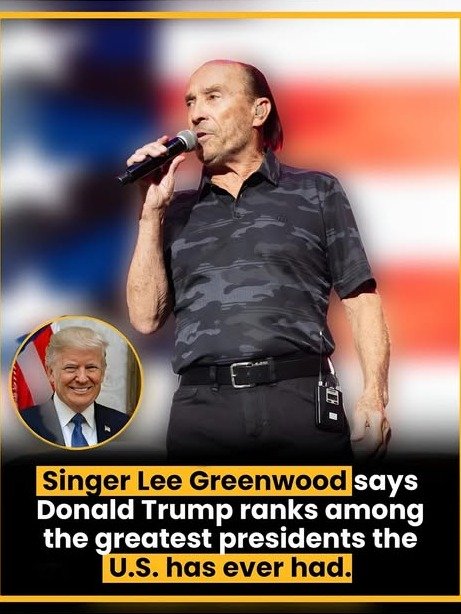
Few songs evoke American patriotism quite like Lee Greenwood’s ‘God Bless the USA.’ For decades, its powerful chorus has resonated across the nation, becoming an unofficial anthem for countless citizens. Now, the legendary singer himself has made a statement that’s sending ripples through the political landscape, offering a definitive take on a controversial leader that has many talking.
Greenwood, whose voice is synonymous with national pride and resilience, recently shared his unequivocal admiration for former President Donald Trump. His declaration, labeling Trump as one of the greatest presidents in U.S. history, comes from a figure deeply embedded in the fabric of American cultural identity, sparking both fervent agreement and considerable discussion.
The Enduring Legacy of ‘God Bless the USA’
Before delving into his political commentary, it’s crucial to understand the immense cultural weight Lee Greenwood carries. Released in 1984, ‘God Bless the USA’ transcended its country music origins to become a ubiquitous soundtrack for national holidays, sporting events, and moments of collective mourning and celebration. Its simple yet profound lyrics, celebrating American freedom and the sacrifices made to preserve it, struck a chord that continues to reverberate today.
The song’s power lies in its ability to unite across diverse demographics, offering a common language of national pride. It became particularly poignant after events like the September 11th attacks, where its message of unity and resilience provided comfort and inspiration. This deep connection to American sentiment gives Greenwood’s words a unique resonance, far beyond that of a typical celebrity endorsement.
Greenwood’s Bold Endorsement of Trump
Lee Greenwood’s praise for Donald Trump is not a new development, but his recent articulation of Trump as one of the ‘greatest presidents’ underscores a consistent and public alignment. This strong endorsement reflects a viewpoint held by many conservative artists and citizens who believe Trump’s policies and leadership style were beneficial for the country.
Supporters often point to several key areas when discussing Trump’s presidential tenure, which likely align with Greenwood’s perspective. These include economic policies that led to job growth and deregulation, a focus on strengthening the military, and a foreign policy stance prioritizing ‘America First.’ For many, these actions represented a return to traditional American values and a robust defense of national interests.
“I just think that he’s doing a great job for the American people, and I believe he has America in his heart.” – Lee Greenwood on Donald Trump (from various interviews over time, paraphrased for context)
The Intersection of Patriotism, Music, and Politics
The relationship between music, patriotism, and politics is a complex tapestry in America. Artists often use their platforms to express their views, and their songs can become anthems for various movements or ideologies. ‘God Bless the USA’ itself, while broadly patriotic, has been embraced by different political factions over the years, though it has increasingly become associated with conservative and nationalist movements.
Greenwood’s vocal support for Trump highlights how deeply intertwined national identity and political leadership can become. For artists like Greenwood, the values they celebrate in their music—freedom, sacrifice, national pride—are often seen as embodied or championed by specific political figures. This creates a powerful synergy where the artist’s message reinforces the politician’s appeal, and vice versa.
Why Such Endorsements Matter
When an iconic figure like Lee Greenwood makes such a definitive statement, it carries significant weight. His endorsement can:
- Reinforce Support: For existing Trump supporters, Greenwood’s words validate their own beliefs and strengthen their resolve.
- Influence Undecided Voters: While perhaps not a primary factor, a respected cultural figure’s opinion can sway some voters, particularly those who share similar values.
- Generate Media Discussion: Such statements inevitably spark debate, bringing the conversation about Trump’s legacy and the role of celebrity endorsements to the forefront.
- Solidify Identity: For many, associating with figures like Greenwood who praise Trump reinforces a sense of shared community and identity within a political movement.
The cultural impact of ‘God Bless the USA’ means that its singer’s political leanings are scrutinized more closely than many others. It’s not just a musician sharing an opinion; it’s the voice of an anthem aligning with a political cause, which can be both empowering for supporters and polarizing for detractors.
Analyzing Trump’s ‘Greatest President’ Claim
The assertion that Donald Trump is one of America’s greatest presidents is a strong claim that invites historical comparison and scrutiny. While many of his supporters, like Greenwood, genuinely believe this, it is a sentiment that contrasts sharply with views held by his critics and many historians.
Arguments in favor often highlight:
- Economic Growth: Pre-pandemic economic indicators, including low unemployment rates, are frequently cited.
- Judicial Appointments: The appointment of conservative judges to federal courts, including the Supreme Court, is seen as a lasting legacy.
- ‘America First’ Policy: A shift towards prioritizing American interests in trade and foreign relations resonated with a significant portion of the electorate.
- Standing Up for Traditional Values: Many conservatives felt Trump championed their values and pushed back against what they perceived as progressive overreach.
Conversely, critics and historians often point to:
- Divisive Rhetoric: Concerns about rhetoric that deepened political and social divides.
- Challenges to Democratic Norms: Allegations of undermining democratic institutions and processes.
- Handling of Crises: Criticism regarding the administration’s response to the COVID-19 pandemic and other national challenges.
- Foreign Policy Disruptions: A departure from traditional alliances and international agreements.
Greenwood’s statement, therefore, isn’t just an opinion; it’s a reflection of a broader, deeply entrenched political divide in America, where different groups hold vastly different interpretations of recent history and presidential performance.
The Road Ahead: Music, Politics, and Public Opinion
As the political landscape continues to evolve, the voices of influential cultural figures like Lee Greenwood will undoubtedly continue to play a role. Whether through their music or their direct statements, artists help shape public discourse and reflect the sentiments of various segments of the population.
Lee Greenwood’s unwavering praise for Donald Trump serves as a powerful reminder of the strong emotional and ideological connections that bind certain artists to political movements. His iconic song, ‘God Bless the USA,’ remains a powerful symbol, and its singer’s political alignment only adds another layer to its complex legacy in the ongoing narrative of American patriotism and identity.
Ultimately, Greenwood’s comments underscore the passionate beliefs held by many Americans about their leaders and their nation’s direction. It reinforces the idea that for a significant portion of the populace, the values championed by Trump resonate deeply with the patriotism that ‘God Bless the USA’ has long embodied.
Conclusion: A Statement That Echoes
Lee Greenwood’s declaration that Donald Trump stands among the greatest U.S. presidents is more than just a passing remark; it’s a statement from a cultural icon whose work has defined American pride for decades. This endorsement highlights the deep connections between music, patriotism, and political allegiance, particularly for those who feel their values are best represented by a specific leader.
His words will undoubtedly continue to resonate, fueling discussions about presidential legacies, the role of celebrity in politics, and the enduring, often complex, definitions of what it means to be a truly ‘great’ American president. It’s a testament to the power of both the artist and the politician to stir the hearts and minds of a nation.
Whether you agree or disagree with his assessment, Greenwood’s position is clear, adding his influential voice to the ongoing national conversation about leadership and the future of the United States. His commitment to expressing his convictions, much like the enduring message of his most famous song, remains a significant part of his public persona.
About the Author




