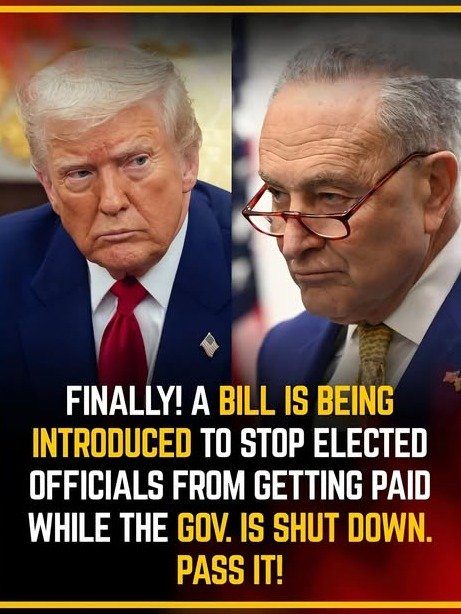
Imagine millions of federal workers facing financial uncertainty, essential services grinding to a halt, and critical government functions suspended – all while the very individuals responsible for the impasse continue to collect their full salaries. This stark reality has long fueled public outrage, but a groundbreaking new proposal is aiming to change it forever.
For years, the public has watched in disbelief as government shutdowns leave countless Americans in limbo, while members of Congress, the architects of these fiscal standoffs, remain financially untouched. This perceived double standard has eroded public trust and intensified calls for greater accountability from elected officials. Now, a bipartisan effort is gaining traction, threatening to hit lawmakers where it truly counts: their paychecks.
The Heart of the Matter: Senator Kennedy’s Bold Proposal
At the center of this legislative earthquake is a bill introduced by Senator John Kennedy, a Republican from Louisiana. This isn’t just another piece of legislation; it’s a direct challenge to the status quo, designed to ensure that if the government shuts down, the paychecks of those who caused it also pause. The premise is simple yet powerful: if federal workers and essential services are impacted, so too should the compensation of the nation’s lawmakers.
The proposed legislation, often referred to as the ‘No Budget, No Pay’ bill, would effectively withhold salaries for members of Congress – including senators and representatives – for the duration of any government shutdown. This isn’t about eliminating their pay entirely, but rather creating a direct financial consequence for their failure to pass appropriations bills and keep the government funded. It aims to align the incentives of elected officials with the well-being of the nation.
A History of Frustration: Congressional Pay During Shutdowns
Government shutdowns have become an unfortunate, recurring feature of American politics, with significant impacts on the economy, federal workforce, and public services. From the epic 21-day shutdown in 1995-96 to the longest in U.S. history in 2018-19, these impasses have consistently highlighted a perceived inequity: federal employees are furloughed or forced to work without pay, while Congress members continue to draw their salaries.
The reason for this disparity lies partly in the U.S. Constitution’s 27th Amendment, which states that “No law varying the compensation for the services of the Senators and Representatives shall take effect, until an election of Representatives shall have intervened.” This amendment was designed to prevent Congress from giving themselves immediate raises or cuts, ensuring that voters have a chance to weigh in on such decisions. However, it has also been interpreted as a barrier to immediately withholding pay during a shutdown, leading to complex legal and ethical debates.
Why This Matters: The Argument for Accountability
The core argument for Senator Kennedy’s bill is rooted in accountability. Proponents believe that by making lawmakers financially feel the pinch of a shutdown, it will create a stronger incentive for them to reach a budget agreement and avoid future impasses. It’s about shared sacrifice and demonstrating that elected officials are truly serving the public, not just themselves.
“When the government shuts down, countless Americans suffer. Our federal employees go without pay, vital services are disrupted, and our economy takes a hit. It’s only fair that if Congress can’t do its most basic job – funding the government – then they shouldn’t get paid either,” stated Senator Kennedy when introducing the bill.
This sentiment resonates deeply with the American public. Polls consistently show overwhelming support for measures that would dock congressional pay during shutdowns. It’s seen as a common-sense solution to a persistent problem, one that could restore a much-needed sense of fairness and public trust in the legislative process.
Challenges and Counterarguments: A Deeper Look
While the proposal enjoys broad public support, its path to becoming law is fraught with challenges. One of the primary hurdles is the aforementioned 27th Amendment. Legal scholars have debated whether withholding pay during a shutdown constitutes “varying the compensation,” which would require an intervening election to take effect. Some argue that simply pausing pay, with the intent to restore it later, might circumvent this issue, while others maintain it’s a direct violation.
Beyond constitutional concerns, some critics argue that such a measure could have unintended consequences. They suggest that it might not necessarily incentivize faster resolution but could instead lead to more entrenched political positions, as lawmakers might dig in their heels to avoid the appearance of capitulating under financial duress. Others worry it could discourage qualified individuals from running for office if the financial stability of the role becomes too precarious.
Public Sentiment and Political Will
Despite these potential obstacles, the political pressure to address congressional pay during shutdowns is immense. The public’s patience with political gridlock and its consequences is wearing thin. Lawmakers who vote against such a measure might face significant backlash from their constituents, who increasingly demand that their representatives demonstrate genuine commitment to public service.
The bill’s success will ultimately depend on the political will within Congress. Will enough members prioritize public trust and accountability over their own financial security? The bipartisan nature of the support for similar measures in the past suggests that there is a significant appetite for this kind of reform, transcending traditional party lines. It speaks to a shared frustration that unites voters across the political spectrum.
Broader Implications: Beyond Just Pay
While pausing congressional pay is a significant step, it also opens up a broader conversation about legislative reform and the root causes of government shutdowns. Is it merely a symptom of deeper issues, such as partisan polarization, a broken budget process, or a lack of compromise? Many believe that while accountability for pay is crucial, it must be part of a larger effort to fix how Congress operates.
- Budget Process Reform: Many advocate for changes to the federal budget process itself, making it more difficult to reach impasses.
- Bipartisan Cooperation: Encouraging more collaboration and less confrontational politics is seen as essential to prevent future shutdowns.
- Restoring Trust: Measures like the ‘No Budget, No Pay’ bill are vital for rebuilding public confidence in government institutions.
This proposal isn’t just about money; it’s about sending a powerful message that those elected to serve the public must be held to the highest standards of responsibility, especially when their actions directly impact the lives of millions of Americans.
Looking Ahead: The Path to Passage
The journey for Senator Kennedy’s bill from proposal to law will be challenging. It will require navigating committee approvals, securing votes in both the Senate and the House, and potentially overcoming constitutional challenges. The debate will undoubtedly be robust, with passionate arguments from both sides.
However, the growing public demand for congressional accountability during shutdowns creates a powerful momentum. As the bill moves through the legislative process, every vote will be scrutinized, and every lawmaker will be forced to take a public stand on whether they believe Congress should share in the financial burden of the shutdowns they create. The outcome of this debate could fundamentally reshape the incentives and responsibilities of our elected officials.
A Turning Point for Congressional Accountability?
Senator John Kennedy’s proposal to pause congressional pay during a government shutdown represents more than just a legislative maneuver; it’s a litmus test for accountability in Washington. It forces lawmakers to confront the very real consequences of their inability to govern and offers a tangible way to align their experiences with those of the American people. As this critical bill makes its way through Congress, the nation watches, hoping for a future where political gridlock no longer comes with a free pass for those who cause it.
The passage of such a bill could mark a significant turning point, not only in how government shutdowns are handled but also in restoring a sense of fairness and responsibility to the highest levels of American politics. It’s a chance to prove that in a democracy, no one, not even an elected official, is above feeling the direct impact of their own decisions.
About the Author




