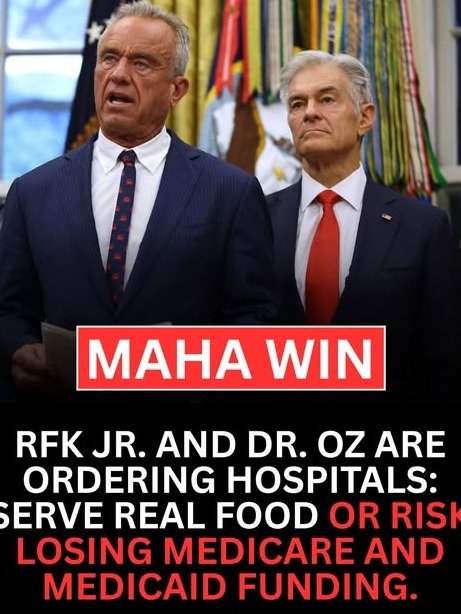
Imagine a world where hospital food isn’t just an afterthought, but a powerful prescription for healing. For decades, the phrase “hospital food” has conjured images of bland, processed, and often unappetizing meals. But what if that perception, and the reality behind it, was all about to change?
A groundbreaking new healthcare initiative, dubbed the “MAHA Health Push,” is quickly gaining national attention, championed by an unexpected and influential duo: political figure Robert F. Kennedy Jr. and celebrity physician Dr. Mehmet Oz. Their bold proposal aims to fundamentally revolutionize hospital nutrition, demanding that healthcare institutions prioritize real, whole-food options or face significant repercussions.
The Unseen Power of Your Plate: Why Nutrition Matters Most
The premise behind the MAHA Health Push is both simple and profound: food is medicine. While modern medicine excels in acute care and advanced procedures, the foundational role of nutrition in recovery, chronic disease management, and overall patient well-being has often been alarmingly overlooked within hospital walls. Patients battling serious illnesses, recovering from surgery, or managing complex chronic conditions are frequently served meals that contradict the very principles of health and healing.
Consider the typical hospital menu: often dominated by highly processed foods, sugary drinks, refined carbohydrates, and artificial ingredients. These convenient and often cost-effective options for institutions can, ironically, actively hinder a patient’s healing process, contribute to inflammation, and even exacerbate underlying health issues, prolonging recovery. The MAHA Health Push seeks to urgently correct this critical disconnect, advocating for a return to nutritional common sense.
Power Players Unite: The Faces Behind the ‘MAHA’ Movement
Robert F. Kennedy Jr., known for his long-standing advocacy in environmental and public health sectors, brings a powerful voice for systemic change and a critical perspective on industrial practices that impact human well-being. Dr. Mehmet Oz, a distinguished cardiothoracic surgeon and widely recognized television personality, has consistently championed preventative health and the transformative power of lifestyle choices, including diet, in managing wellness and preventing disease.
“For far too long, our healthcare institutions have focused almost exclusively on treating symptoms while neglecting the fundamental role of what we put into our bodies,” a proponent of the MAHA initiative might passionately argue. “This proposal isn’t just about food; it’s about redefining patient care itself and empowering recovery from the inside out.”
Their combined influence creates a formidable and unique force, capable of drawing unprecedented national attention to an issue that, while undeniably critical, has often remained relegated to the shadows of healthcare policy. Their active involvement signals a serious and determined intent to move beyond mere discussions and towards concrete policy changes that could dramatically reshape healthcare delivery across the nation.
No More Empty Calories: The Strict New Rules for Hospitals
At its core, the MAHA Health Push proposes a radical and non-negotiable shift: hospitals that fail to adopt comprehensive, evidence-based whole-food nutrition programs would risk severe and tangible penalties. While the precise nature of these penalties is still being meticulously defined, the implications could range from significantly reduced federal funding and challenging accreditation status to a substantial loss of public trust and patient referrals, impacting their very viability.
This isn’t merely a polite suggestion; it’s presented as an ultimatum designed to catalyze profound change. The initiative is pushing for a systemic overhaul, compelling hospitals to make significant investments in fresh, unprocessed ingredients, meticulously re-evaluate their entire food procurement processes, and extensively train food service staff in preparing genuinely nourishing, from-scratch meals. It represents a direct and bold challenge to the deeply entrenched status quo, where convenience and cost too often tragically trump nutritional value and patient well-being.
Defining “Whole Foods” in a Hospital Setting
One of the critical and complex questions that immediately arises with such a sweeping proposal is: how exactly will “whole foods” be precisely defined and consistently implemented within the demanding context of a busy hospital kitchen? The MAHA Health Push envisions a clear and actionable framework, focusing on:
- Minimally Processed Ingredients: Prioritizing foods in their most natural state, consciously free from artificial additives, excessive sugars, unhealthy trans fats, and synthetic colorings.
- Plant-Forward Options: Emphasizing an abundance of fresh fruits, a diverse array of vegetables, nutrient-rich whole grains, and protein-packed legumes as the foundational cornerstone of all patient meals.
- Sustainable and Local Sourcing: Actively encouraging hospitals to forge partnerships with local farmers and regional suppliers to ensure optimal freshness, reduce environmental impact, and vigorously support regional economies.
- Nutrient Density: Ensuring that every single meal served contributes meaningfully and effectively to a patient’s holistic nutritional needs, thereby actively aiding in rapid recovery and robust immune system boosting.
The overarching goal is to decisively move away from the current reliance on pre-packaged, high-sodium, and sugary options towards a culinary paradigm where meals actively and synergistically support the body’s intrinsic natural healing mechanisms. This profound commitment to real food is also intended to extend beyond just the patient tray, influencing staff meals and cafeteria offerings, thereby fostering a pervasive culture of wellness throughout the entire institution.
Transforming Care: The Ripple Effect of Real Food
The potential benefits of the MAHA Health Push are vast, multifaceted, and far-reaching, extending well beyond the individual patient plates. Implementing a comprehensive whole-food approach could lead to a cascade of positive outcomes:
- Improved Patient Outcomes: Superior nutrition demonstrably supports faster wound healing, cultivates stronger immune responses, and significantly reduces post-operative complications, potentially leading to much shorter and more efficient hospital stays.
- Reduced Readmission Rates: Patients who leave the hospital equipped with a better understanding of healthy eating and who have experienced genuinely nourishing meals during their stay are demonstrably less likely to return due to preventable nutrition-related issues.
- Lower Overall Healthcare Costs: Healthier, more rapidly recovering patients translate directly into fewer interventions, shorter recovery periods, and a substantially reduced burden on the entire healthcare system in the long run.
- Enhanced Patient Satisfaction: High-quality, delicious, and thoughtfully prepared food can dramatically improve a patient’s overall experience, transforming a frequently dreaded aspect of hospitalization into a surprisingly positive and comforting one.
- Improved Staff Wellness and Morale: When healthy, appealing food options are readily available for both patients and staff, it contributes significantly to a healthier, more energized, and ultimately more productive workforce within the hospital environment.
This initiative isn’t merely about feeding people; it’s about fundamentally altering the trajectory of health and recovery for millions. It’s about recognizing, unequivocally, that the food we consume is a powerful, often underestimated determinant of our health, especially when we are at our most vulnerable.
Navigating the Kitchen Storm: Obstacles to a Healthier Future
While the vision presented by the MAHA Health Push is undeniably compelling, the path to widespread implementation is admittedly fraught with significant challenges. Hospitals operate on notoriously tight budgets and within incredibly complex logistical frameworks. The proposed shift to whole foods would necessitate substantial investment and meticulously strategic planning:
- Significant Cost Implications: Sourcing fresh, high-quality, and often organic ingredients can be considerably more expensive than relying on highly processed, bulk-purchased, and shelf-stable alternatives.
- Massive Supply Chain Overhaul: Establishing entirely new relationships with local farmers and regional distributors, and ensuring a consistent, reliable supply of fresh produce, will be a monumental and intricate logistical task.
- Kitchen Infrastructure and Extensive Staff Training: Many existing hospital kitchens are primarily designed for reheating pre-made meals, not for from-scratch cooking. Chefs and food service staff would require extensive retraining in advanced culinary skills focused on fresh, unprocessed ingredients.
- Resistance from Existing Contracts: Large, powerful food service corporations that currently supply the vast majority of hospitals may vehemently resist changes that directly impact their established business models and lucrative contracts.
- Defining and Standardizing: Creating clear, actionable, and universally applicable guidelines for what constitutes “whole food” that can be uniformly applied across diverse hospital settings, each with unique needs and resources, will be a complex and ongoing endeavor.
Critics might also legitimately raise concerns about accommodating a vast array of patient preferences, highly specialized dietary needs, and the sheer logistical scale of feeding thousands of patients daily. However, proponents steadfastly argue that these challenges, while real, are entirely surmountable with unwavering dedication, innovative solutions, and a clear, unyielding commitment to paramount patient well-being.
A Broader Movement: Connecting to Public Health
The MAHA Health Push aligns seamlessly with a growing, global movement towards embracing the concept of “food as medicine.” From burgeoning community gardens in urban areas to innovative physician-prescribed produce programs, there’s a rapidly burgeoning recognition that nutrition is an indispensable cornerstone of preventative health and an incredibly powerful, often underutilized, tool in managing and even reversing chronic diseases like diabetes, heart disease, and obesity.
By fundamentally transforming hospital food, this initiative could serve as a powerful and inspiring beacon, actively inspiring healthier eating habits not just within the immediate confines of healthcare institutions, but throughout the broader communities they serve. It could foster a new and profound appreciation for the intrinsic connection between what we consume and how we feel, an understanding that endures long after a patient leaves the hospital doors, empowering individuals to take control of their health.
Your Health, Your Hospital: What’s Next?
The “MAHA” Health Push, vigorously backed by prominent and influential figures like RFK Jr. and Dr. Oz, represents a truly pivotal and potentially transformative moment in the ongoing national conversation about comprehensive healthcare reform. It challenges us all to look beyond conventional pills and complex procedures, and to profoundly consider the deep and lasting impact of daily nourishment on our individual and collective health trajectories.
For patients, this could herald a future where hospital stays are not just about recovery from acute illness, but also about invaluable education and profound empowerment through truly healing, restorative food. For hospitals, it presents an unparalleled opportunity to lead by exemplary example, demonstrating a holistic and compassionate commitment to wellness that extends seamlessly from the operating room to the meticulously prepared dining tray.
As this ambitious proposal continues to gain significant momentum, it will be absolutely crucial for the public, dedicated healthcare professionals, and visionary policymakers to engage in robust, open, and constructive discussions about its feasibility, its far-reaching potential impact, and the most effective ways to ensure that every single patient, regardless of their circumstances, has equitable access to the life-sustaining nourishment they desperately need to truly heal and thrive.
About the Author




