Imagine spending decades diligently paying off your mortgage, only to find that rising property taxes still threaten your ability to stay in the home you love. This is a harsh reality for countless senior homeowners across America. With fixed incomes struggling against ever-increasing costs of living, the burden of property taxes can feel like an insurmountable challenge, forcing difficult decisions about retirement and housing.
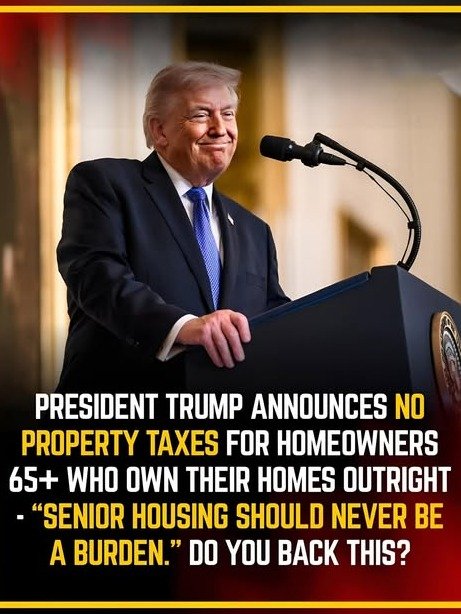
Amidst these growing concerns, President Donald Trump has unveiled a significant proposal aimed directly at alleviating this pressure. His plan focuses on providing targeted property tax relief for homeowners aged 65 and older who have achieved the milestone of owning their homes outright, a move that could be a game-changer for millions of retirees.
The Core of Trump’s Property Tax Relief Proposal
At its heart, President Trump’s initiative seeks to offer a much-needed financial lifeline to a specific demographic: senior citizens who have paid off their mortgages. The proposal targets individuals aged 65 and above, recognizing that this stage of life often comes with increased financial vulnerabilities, particularly for those relying on pensions, Social Security, or limited savings.
The critical condition for eligibility is outright homeownership. This means the homeowner has no outstanding mortgage debt on their primary residence. While many property tax relief programs exist at state and local levels, Trump’s proposal aims to create a more comprehensive, potentially federally backed solution, addressing a gap that often leaves even debt-free seniors vulnerable to tax increases.
While specific details about the mechanism of relief are still emerging, the general concept suggests a direct financial benefit. This could manifest as a federal tax credit, a direct subsidy, or a program that incentivizes states to provide deeper exemptions. The overarching goal is clear: to ensure that seniors who have worked hard to achieve homeownership are not subsequently taxed out of their homes.
Why Seniors Need This Lifeline More Than Ever
The economic landscape for seniors has become increasingly challenging. Inflation erodes the purchasing power of fixed incomes, while the costs of essential services like healthcare, utilities, and groceries continue to climb. For many, their home represents their largest asset, but also a significant liability due to ongoing property tax obligations.
Property taxes are a unique burden because they are a non-negotiable, recurring expense that doesn’t necessarily correlate with a homeowner’s current income. Even if a senior’s income decreases in retirement, their property taxes can continue to rise, driven by increasing property values in their area. This creates an unsustainable situation for many who wish to age in place.
The emotional and psychological toll of this financial strain cannot be overstated. The threat of losing a cherished family home due to an inability to keep up with tax payments is a profound source of anxiety for older adults. This proposal directly addresses that fear, offering a pathway to greater financial security and peace of mind.
Who Stands to Benefit Most from This Initiative?
The primary beneficiaries of this proposed relief are senior homeowners who have diligently paid off their mortgages and are now entirely debt-free on their homes. This group often includes individuals who have lived in their homes for decades, building communities and contributing to local economies, only to face escalating tax bills in their later years.
By focusing on outright ownership, the proposal targets those who might otherwise be considered
About the Author




