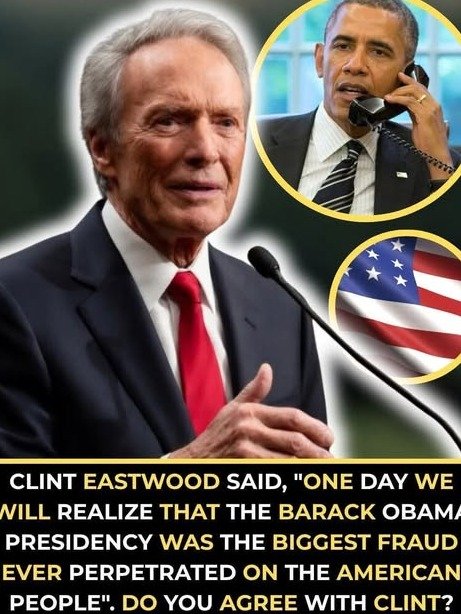
Imagine a packed political convention, the air thick with anticipation, and then… an empty chair becomes the star of the show. That’s exactly what happened in 2012 when Hollywood legend Clint Eastwood took the stage at the Republican National Convention, delivering a speech so unconventional, it instantly etched itself into the annals of political folklore.
It was a moment that transcended politics, becoming a cultural phenomenon overnight. A decade later, the image of Clint Eastwood debating an invisible President Obama, personified by an empty chair, remains as vivid and polarizing as ever. But beyond the memes and the immediate shock, what was the true impact of this bizarre, unscripted performance, and why do we still talk about it?
The Stage is Set: RNC 2012 in Tampa
The year was 2012, and the Republican Party was gathered in Tampa, Florida, to officially nominate Mitt Romney as their candidate to challenge incumbent President Barack Obama. The atmosphere was charged; the economy was a major concern, and the nation was deeply divided. The convention was designed to showcase party unity, energize the base, and present Romney as a strong, credible leader ready to take the helm.
As part of the lineup of speakers, a roster of conservative luminaries and rising stars was scheduled to address the delegates. Among them was one of Hollywood’s most enduring figures, Clint Eastwood, a self-proclaimed libertarian whose conservative leanings were well-known, though he rarely engaged in such direct political theater.
Eastwood’s Unexpected Arrival and Political Stance
Clint Eastwood, a cinematic icon revered for his stoic portrayals of tough-guy characters and his masterful direction, had a history of supporting Republican candidates, even serving as mayor of Carmel-by-the-Sea, California, in the 1980s. His presence at the RNC was a significant endorsement for Mitt Romney, lending a powerful voice from the entertainment world to the Republican cause.
However, what transpired on that August evening was far from the polished, teleprompter-driven speeches typically delivered at such high-stakes events. Eastwood, then 82 years old, was known for his independent spirit and a tendency to speak his mind, but few could have predicted the spectacle he was about to create.
The Unscripted Performance Begins: Enter the Empty Chair
As the lights hit the stage, Eastwood emerged to a roaring ovation. He was there to introduce Mitt Romney, but instead, he began an unscripted, rambling monologue. The critical prop arrived early: an empty chair, positioned squarely beside him on the stage. This was no ordinary prop; it was intended to represent President Barack Obama.
“I’ve got a guy over here who is a, an invisible President,” Eastwood declared, gesturing to the empty seat. “And he’s just kinda walking around and doing a lot of things, you know. I think if you’re gonna have a President, you need to have somebody that’s gonna make some calls.”
With this simple, yet profoundly bizarre setup, Eastwood launched into a conversational, often disjointed, dialogue with the invisible President. He addressed the chair as if Obama himself were sitting there, questioning his policies, critiquing his leadership, and even making light of his campaign promises.
The “Invisible Obama” Dialogue: Key Criticisms
Eastwood’s monologue touched upon several key Republican talking points of the time, all framed as a direct conversation with the absent President. He criticized Obama’s handling of the economy, the war in Afghanistan, and his perceived failure to deliver on promises.
- Economic Policies: Eastwood challenged the invisible Obama on the high unemployment rate and the national debt, asking, “What do you want me to tell Romney? I can’t tell him to do that, I can’t tell him to do that.”
- Guantanamo Bay: He brought up the President’s unfulfilled promise to close the detention facility, saying, “Why didn’t you close Guantanamo?”
- Leadership Style: He portrayed Obama as out of touch and unresponsive, suggesting he was merely giving orders from above without understanding the struggles of everyday Americans.
The dialogue was punctuated by long pauses, shrugs, and a folksy, almost grandfatherly tone, creating an atmosphere that swung wildly between comedic absurdity and genuine political critique. It was raw, unpolished, and utterly captivating in its unpredictability.
Reactions from the Floor and Beyond
The immediate reaction within the convention hall was a mix of confusion, amusement, and discomfort. Some delegates cheered, finding the performance refreshingly authentic and daring. Others looked bewildered, unsure if they were witnessing a stroke of genius or a catastrophic gaffe. The cameras panned to various faces, revealing a spectrum of emotions.
Online, the reaction was instantaneous and explosive. Social media, particularly Twitter, erupted. The hashtag #empty chair immediately began trending worldwide, becoming one of the most talked-about moments of the entire convention. Memes featuring Eastwood and the empty chair proliferated at lightning speed, cementing the moment in internet history.
A Social Media Firestorm and Media Scrutiny
Within minutes, the empty chair became a symbol. For supporters, it represented a bold, unfiltered critique of the President, a theatrical demonstration of his perceived absence of leadership. For critics, it was seen as a bewildering, even embarrassing, display that detracted from the seriousness of the convention and potentially hurt the Romney campaign.
Traditional media outlets struggled to categorize the event. Was it a political speech? Performance art? A senior moment? Pundits from across the political spectrum weighed in, offering wildly different interpretations. Some called it a “train wreck,” while others praised its audacious originality and its ability to cut through the typical political rhetoric.
Campaign Responses: Awkward Embraces and Swift Counters
The Romney campaign found itself in an awkward position. While they initially tried to embrace the moment as a sign of Eastwood’s independent spirit, the widespread ridicule made it difficult. Romney’s strategists reportedly had no prior knowledge of Eastwood’s plan for the chair and were scrambling to manage the fallout.
The Obama campaign, however, seized the opportunity with remarkable speed. Within hours, a photo of President Obama sitting in the Oval Office, with his back to the camera and the caption
“This seat’s taken,”
was posted on his official Twitter account. It was a brilliant, concise counter-punch that perfectly encapsulated the political debate and diffused some of the intended impact of Eastwood’s stunt.
Eastwood’s Defense and Intent: “I Was Having a Good Time”
In the aftermath, Eastwood himself remained unrepentant. He later explained that he had wanted to do something different, something that wasn’t just another politician reading from a script. He told the Carmel Pine Cone that he had been offered a speech written by the Romney campaign but preferred to improvise.
“I was having a good time,” Eastwood stated. “I don’t know what the hell I’m doing. I’m just having a good time.” He also added, “If somebody’s dumb enough to ask me to go to a political convention and say something, they’re gonna have to take what they get.”
His intention, he suggested, was to inject some much-needed humor and directness into the often-stuffy world of political conventions. He wanted to highlight the frustration many Americans felt with the political establishment and the perceived lack of accountability from elected officials.
Cultural Aftermath and Lasting Legacy
The empty chair speech quickly permeated popular culture. Late-night talk shows parodied it relentlessly, comedians incorporated it into their routines, and it became a shorthand for awkward, unscripted political moments. It spawned countless Halloween costumes, internet memes, and even academic discussions about the role of celebrity and performance in political discourse.
More than just a viral moment, the speech raised important questions about the nature of political communication in the age of social media. It demonstrated how quickly an unconventional act could spread, be interpreted, and reinterpreted, often beyond the speaker’s original intent. It also highlighted the fine line between authenticity and gaffe, especially when a revered figure steps outside their usual domain.
The Enduring Question: Brilliant Move or Costly Gaffe?
A decade on, the empty chair speech remains a fascinating case study. Was it a brilliant, subversive act of political theater that resonated with a frustrated electorate? Or was it an ill-advised, rambling performance that embarrassed a presidential campaign and overshadowed its message?
Perhaps it was both. It certainly grabbed attention, and in an election cycle often dominated by carefully crafted messages, Eastwood’s raw, unscripted approach was undeniably unique. It spoke to a segment of the population that felt unheard, while simultaneously alienating others with its perceived disrespect.
Conclusion: A Unique Place in Political History
Clint Eastwood’s empty chair speech at the 2012 RNC stands as one of the most memorable and peculiar moments in modern American political history. It was a testament to the power of improvisation, the unpredictable nature of live television, and the rapid-fire amplification of social media.
More than just a celebrity endorsement gone rogue, it was a cultural flashpoint that sparked debates, laughter, and outrage, leaving an indelible mark on how we view the intersection of Hollywood and Washington. The empty chair may have been invisible, but its impact was anything but, reminding us that sometimes, the most unexpected moments are the ones that resonate the longest.
About the Author




