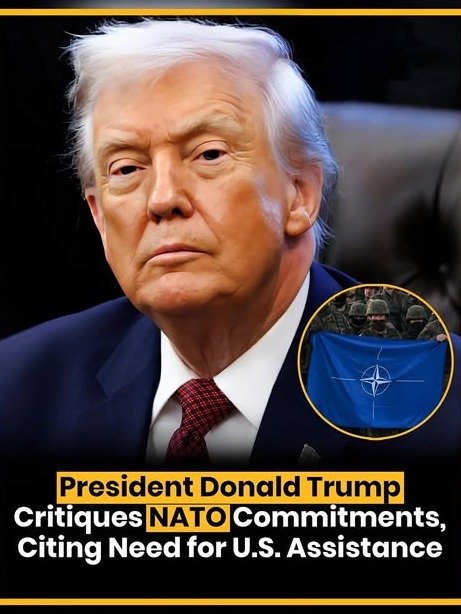
Imagine an alliance designed to protect the free world, suddenly facing its greatest internal challenge not from an external adversary, but from its most powerful member. This was the dramatic reality that unfolded during Donald Trump’s presidency, as his unwavering insistence on NATO allies significantly increasing their defense contributions sent shockwaves across Europe and beyond.
His message was clear, blunt, and often delivered with a palpable sense of urgency: European nations needed to pay their fair share, or risk the very foundations of the transatlantic security pact. This wasn’t merely a polite request; it was an ultimatum that fundamentally reshaped discussions about defense spending, collective responsibility, and the future of global security.
The Core of the Controversy: Burden-Sharing and the 2% Pledge
At the heart of Trump’s grievances was the long-standing issue of ‘burden-sharing’ within NATO. For decades, the United States has borne a disproportionate share of the alliance’s defense costs, often contributing significantly more in terms of military personnel, equipment, and financial resources compared to many European members. This imbalance, in Trump’s view, was unsustainable and unfair to American taxpayers.
The specific target he frequently cited was the 2% of GDP defense spending guideline, a commitment made by all NATO members at the 2014 Wales Summit. This pledge, established in response to Russia’s aggression in Ukraine and the rise of new security threats, aimed to ensure that allies were adequately investing in their own defense capabilities. However, by the time Trump took office, many nations were still far from meeting this benchmark.
“We’re protecting Europe, and we’re paying for a big percentage of it. That’s not fair. They’ve got to step up and pay,” Trump frequently asserted, encapsulating his frustration and the core demand he placed on allies.
A Historical Perspective: NATO’s Origins and Evolving Role
To truly grasp the magnitude of Trump’s demands, it’s essential to understand NATO’s historical context. Formed in 1949, the North Atlantic Treaty Organization was a direct response to the Cold War, designed to deter Soviet aggression and ensure collective defense. Its foundational principle, Article 5, states that an attack on one member is an attack on all, a powerful deterrent that has kept the peace in Europe for over 70 years.
For much of its existence, NATO relied heavily on the United States’ military might and economic power. European nations, particularly after World War II, focused on rebuilding their economies and welfare states, often allowing their defense spending to languish below the levels many strategists deemed necessary. The collapse of the Soviet Union in 1991 further fueled this complacency, as the perceived threat diminished and a ‘peace dividend’ allowed for further cuts to military budgets.
Trump’s Unconventional Diplomacy: From Rhetoric to Reality
What set Trump’s approach apart from previous U.S. administrations, which had also urged allies to increase spending, was his confrontational and often transactional rhetoric. He didn’t just ask; he demanded, threatened, and openly questioned the very value of the alliance if contributions remained inadequate. This created immense pressure on European leaders, forcing defense spending to the top of their political agendas.
His public criticisms, often delivered on social media or at international summits, often left allies feeling exposed and undervalued. There were even veiled suggestions that the U.S. might not come to the aid of an ally that wasn’t meeting its financial obligations, a notion that directly challenged the bedrock principle of Article 5 and sent shivers down the spines of many European capitals.
The European Response: Scramble for Compliance and Strategic Rethink
The impact of Trump’s demands on NATO allies was undeniable. While some leaders initially resisted or downplayed the severity of his stance, the sustained pressure eventually led to tangible changes. Many European nations began to significantly increase their defense budgets, often for the first time in decades, striving to reach or at least get closer to the 2% target.
- Germany, long a laggard in defense spending despite its economic power, committed to substantial increases, albeit slowly.
- Eastern European nations, particularly those bordering Russia, were often quicker to respond, recognizing the immediate security imperative.
- France and the UK, traditionally stronger military powers, also reiterated their commitments and continued modernization efforts.
Beyond the numbers, Trump’s rhetoric also forced a broader strategic rethink in Europe. Discussions about ‘European strategic autonomy’ — the idea of Europe being more capable of defending itself without absolute reliance on the U.S. — gained significant traction. This wasn’t necessarily about decoupling from the U.S., but about building a more robust and self-sufficient European defense pillar within NATO.
Arguments For and Against Increased Spending
The debate over defense spending isn’t just about numbers; it involves complex arguments about national priorities, economic realities, and geopolitical strategy.
Arguments for increased spending often highlight:
- Shared Responsibility: All members benefit from collective security and should contribute proportionally.
- Credible Deterrence: A strong, well-funded alliance is more effective at deterring potential adversaries.
- Modernization: Many European militaries suffered from decades of underinvestment, requiring significant upgrades to equipment and capabilities.
- Geopolitical Realities: The resurgence of Russia, instability in the Middle East, and new threats like cyber warfare necessitate robust defense.
Arguments against drastic increases or the 2% target often include:
- Economic Constraints: Diverting funds from social welfare, education, or infrastructure can be politically challenging.
- Different Contributions: Some argue that contributions shouldn’t solely be measured in GDP percentage, but also in specialized capabilities, troop deployments, or diplomatic efforts.
- “Peace Dividend” Philosophy: A belief that post-Cold War Europe should prioritize diplomatic solutions and economic cooperation over military buildup.
The Lingering Legacy: How Trump’s Demands Reshaped NATO’s Future
Even after Trump left office, the impact of his demands continued to reverberate. The calls for increased defense spending have been sustained by subsequent U.S. administrations, albeit with a less confrontational tone. The geopolitical landscape, particularly with Russia’s full-scale invasion of Ukraine, has only underscored the critical importance of a well-resourced and unified NATO.
The invasion served as a stark reminder of the very threats NATO was designed to counter, making the arguments for higher defense spending far less abstract and much more urgent. Nations that had dragged their feet for years suddenly found themselves accelerating their efforts to meet the 2% target, recognizing that the cost of inaction could be far greater.
Donald Trump’s presidency, for all its controversies, indelibly altered the conversation around NATO defense spending. He forced a reckoning, compelling allies to confront their responsibilities in a way that previous diplomatic nudges had failed to achieve. While his methods were often divisive, his core demand for greater burden-sharing has undeniably pushed the alliance towards a stronger, more self-reliant posture.
Beyond the Numbers: The Future of Transatlantic Security
The discussions about defense spending and shared responsibility are far from over. As global security challenges continue to evolve, NATO must adapt. The alliance’s strength lies not only in its military capabilities but also in the unwavering solidarity and shared commitment of its members. Trump’s emphasis, while jarring, ultimately served as a potent catalyst for change, reminding everyone that collective defense is indeed a shared, and costly, endeavor.
The critical question now is how NATO will continue to evolve, balance national interests with collective security, and maintain its relevance in an increasingly complex world. One thing is certain: the legacy of Donald Trump’s forceful insistence on increased contributions will remain a significant chapter in the ongoing story of the world’s most powerful military alliance.
About the Author




