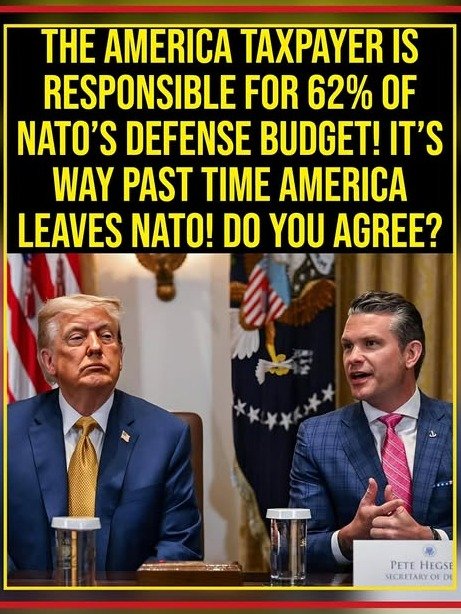
Imagine a world where America significantly scales back its commitment to global defense. What would that mean for the stability we’ve known for decades? Pete Hegseth’s recent comments have ignited a firestorm, forcing us to confront this very question about NATO’s future and America’s pivotal role.
His remarks have not only sparked renewed discussion but have also brought long-standing tensions about defense responsibilities among member countries to the forefront. This isn’t just a political talking point; it’s a critical debate with profound implications for international security and the geopolitical landscape.
The Enduring Alliance: NATO’s Foundation and Purpose
For over 70 years, the North Atlantic Treaty Organization (NATO) has stood as the cornerstone of Western collective security. Founded in 1949, its primary purpose was to deter Soviet expansionism in Europe, an objective enshrined in its famous Article 5: an attack on one member is an attack on all. This principle of collective defense has been the bedrock of transatlantic stability.
The United States, as the alliance’s largest and most powerful member, has historically been its driving force, contributing the lion’s share of military resources and strategic leadership. This commitment helped maintain peace during the Cold War and has adapted to new threats in the post-Cold War era, from terrorism to cyber warfare.
America’s Outsized Role: A Historical Perspective
From its inception, the U.S. has been the indispensable nation within NATO. Its economic might and military superiority were crucial in rebuilding post-war Europe and countering the Soviet threat. This leadership role was not just about military strength; it was about fostering democratic values and economic cooperation across the Atlantic.
For decades, European nations largely accepted this arrangement, benefiting from the American security umbrella while focusing on their own economic recoveries and social programs. However, as Europe’s economies rebounded and global threats diversified, the question of equitable burden-sharing began to emerge.
The Burden-Sharing Debate: A Persistent Point of Contention
The issue of defense spending within NATO is not new. For years, successive U.S. administrations have urged European allies to increase their defense budgets to meet the agreed-upon target of 2% of their Gross Domestic Product (GDP). This target, reaffirmed at the 2014 Wales Summit, aims to ensure all members contribute adequately to the alliance’s collective defense capabilities.
Critics, like Pete Hegseth, often argue that the U.S. shoulders an disproportionate amount of the financial and military load. They point to the fact that many European nations consistently fall short of the 2% target, effectively free-riding on American taxpayers and military prowess. This sentiment suggests that while the U.S. maintains a robust global presence, its allies are not pulling their weight.
“It’s time for our allies to step up and pay their fair share. American taxpayers shouldn’t be solely responsible for Europe’s defense when European economies are strong enough to contribute more.” – A common sentiment echoed by proponents of reduced U.S. involvement.
Pete Hegseth’s Stance: A Call for Re-evaluation
While the original post doesn’t detail Pete Hegseth’s specific arguments, his comments typically align with a perspective that advocates for a more transactional approach to international alliances. This viewpoint, popular among certain conservative and nationalist circles, questions the long-term strategic benefits of maintaining such a heavy U.S. presence in Europe.
Hegseth and those who share his views often suggest that Europe, with its collective economic power and population, should be capable of defending itself. They argue that a reduced U.S. military footprint in Europe would allow America to reallocate resources to domestic priorities or to address emerging challenges in other parts of the world, particularly in Asia.
Arguments for Continued U.S. Leadership in NATO
However, many foreign policy experts and strategists vehemently disagree with the idea of significantly scaling back U.S. involvement. They argue that NATO serves vital American interests, extending far beyond simply defending Europe. The alliance provides a crucial platform for projecting U.S. influence, coordinating global responses to threats, and maintaining a rules-based international order.
- Global Stability: A strong NATO prevents power vacuums and deters aggressive actions from adversaries like Russia.
- Counter-Terrorism: The alliance facilitates intelligence sharing and coordinated operations against terrorist organizations.
- Shared Values: NATO is a community of democracies, promoting shared values and human rights across the transatlantic space.
- Economic Ties: Security stability in Europe directly benefits American economic interests and trade.
These proponents emphasize that the cost of maintaining NATO is a worthwhile investment in global stability, which ultimately benefits American security and prosperity.
The Geopolitical Implications of a Reduced U.S. Role
Should the U.S. significantly reduce its commitment to NATO, the ramifications could be profound. Critics warn of a potential unraveling of the alliance, leading to increased instability across Europe and beyond. Without the U.S. as a unifying force, internal divisions among European nations could widen, and their collective defense capabilities might weaken.
A diminished NATO could embolden revisionist powers, particularly Russia, to pursue more aggressive foreign policy objectives. It could also force European nations to rapidly rearm and forge new, potentially less stable, security arrangements, leading to a new era of geopolitical uncertainty.
Europe’s Path Towards Strategic Autonomy
Interestingly, the debate around U.S. burden-sharing has spurred some European leaders to seriously consider
About the Author




