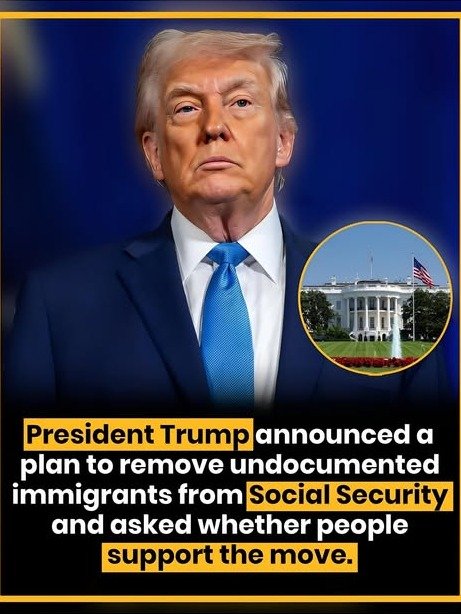
For millions of Americans, Social Security isn’t just a government program; it’s a lifeline, a promise of security in their golden years. But with its future often debated and trust funds facing depletion projections, a critical question looms: what exactly does Donald Trump’s ‘America First’ agenda promise for your retirement security?
Donald Trump has consistently positioned himself as a staunch defender of Social Security, often setting himself apart from other prominent figures within his own party. His rhetoric emphasizes a commitment to protecting existing benefits without resorting to what he views as detrimental cuts or adjustments.
The Core of Trump’s Social Security Stance
Throughout his political career, Donald Trump has maintained a remarkably consistent stance on Social Security. Unlike many Republicans who advocate for raising the retirement age, means-testing benefits, or even partially privatizing the system, Trump has repeatedly vowed to leave these core aspects untouched.
His approach is deeply rooted in the belief that Social Security is a sacred trust, earned by American workers, and should not be tampered with. This position often resonates strongly with a broad base of voters, particularly older Americans who rely heavily on these benefits for their daily living expenses.
During his previous term and in his current campaign, Trump has vocally opposed any proposals that would reduce the payout for current or future beneficiaries. He has also pushed back against increasing the full retirement age, a common suggestion for shoring up the program’s finances.
‘America First’ and Economic Growth as the Solution
So, if he’s not cutting benefits or raising the retirement age, how does Donald Trump propose to ensure Social Security’s long-term solvency? The answer, central to his ‘America First’ philosophy, lies primarily in robust economic growth.
The ‘America First’ agenda champions policies designed to stimulate the domestic economy, bring manufacturing jobs back to the U.S., and foster a competitive business environment. The theory is that a booming economy leads to more people working, higher wages, and consequently, a larger tax base contributing to Social Security.
“We’re not going to hurt the people that have been paying into Social Security their whole lives,” Trump has often stated, implying that economic prosperity is the key to fulfilling these obligations. “We’re going to make our economy so strong that we won’t have to touch it.”
This perspective suggests that the current challenges facing Social Security are not structural, but rather symptoms of an underperforming economy that isn’t generating enough revenue to keep pace with an aging population.
Beyond Economic Growth: Other ‘America First’ Connections
While economic growth is the primary lever, other elements of the ‘America First’ agenda also indirectly relate to Social Security’s future. For instance, Trump’s focus on stricter immigration policies could be viewed through this lens.
Proponents of this view might argue that controlling immigration ensures that available jobs go to American citizens and legal residents, who then contribute to the Social Security trust fund. Critics, however, often counter that immigrants, both legal and undocumented, contribute significantly to the economy and tax base, including Social Security.
Furthermore, the ‘America First’ emphasis on reducing government waste and fraud could also be presented as a way to free up resources, though the scale of such savings in the context of Social Security’s multi-trillion-dollar budget is often debated.
Contrasting Approaches: How Trump Differs
To fully understand Trump’s unique position, it’s helpful to compare it with the proposals typically put forth by other political factions:
- Traditional Republicans: Often suggest raising the full retirement age, adjusting the cost-of-living allowance (COLA) formula, or means-testing benefits for wealthier retirees.
- Democrats: Tend to favor increasing taxes on high earners, eliminating the cap on earnings subject to Social Security taxes, or using general revenue to shore up the trust fund.
Donald Trump has consistently rejected both raising the retirement age and cutting benefits, aligning more closely with the Democratic stance on protecting current beneficiaries, but diverging sharply on the revenue-generation side by opposing tax increases.
His strategy, therefore, presents a distinct third path: protect benefits at all costs, and rely on a revitalized American economy to generate the necessary funds. This populist appeal has been a cornerstone of his platform.
The Financial Realities and Criticisms
While Trump’s commitment to protecting benefits is popular, the actuarial realities of Social Security present significant challenges. The Social Security Administration’s own projections indicate that the trust fund is on track to be depleted by the mid-2030s, at which point it would only be able to pay out about 80% of scheduled benefits if no legislative action is taken.
Critics of Trump’s approach argue that relying solely on economic growth, while desirable, may not be sufficient to close such a substantial long-term funding gap. They point out that even during periods of strong economic growth, the demographic shift of more retirees relative to fewer workers continues to strain the system.
Economists and policy experts often stress the need for a multi-faceted approach, combining revenue increases with spending adjustments, to ensure the program’s solvency for generations to come. Simply hoping for unprecedented economic growth, they contend, might be an overly optimistic gamble with the financial security of millions.
What a Second Trump Term Could Mean for Social Security
Should Donald Trump secure a second term, his administration would likely continue to prioritize his ‘America First’ economic policies, believing them to be the ultimate solution for Social Security. This would mean a continued resistance to any proposals involving benefit cuts or increases to the retirement age.
His administration would likely focus on:
- Tax cuts and deregulation: To further stimulate economic activity and job creation.
- Trade policies: Designed to protect American industries and jobs, thereby theoretically boosting the domestic workforce and tax contributions.
- Immigration reform: With an emphasis on policies that prioritize American workers and potentially impact the future composition of the labor force contributing to Social Security.
The challenge, however, would remain: translating these broad economic policies into concrete, measurable improvements in Social Security’s financial outlook, especially as the trust fund depletion date draws closer.
The Stakes Are High for Every American
The debate over Social Security is not merely an academic exercise; it directly impacts the financial stability and peace of mind for tens of millions of Americans, from current retirees to young workers just beginning their careers.
Donald Trump’s ‘America First’ approach to Social Security offers a distinct vision: one that promises protection of benefits through a revitalized economy, rather than through cuts or tax increases. It’s a strategy that resonates deeply with many, but also faces scrutiny regarding its long-term viability.
As the conversation continues, voters will need to weigh the promises against the financial realities and decide whether the ‘America First’ blueprint offers a sustainable path forward for this cornerstone of American retirement security.
The future of Social Security under any administration is a complex issue, but Trump’s unwavering stance and unique proposals ensure it will remain a central point of discussion in the years to come. Will his bold vision ultimately secure the future of your benefits? Only time, and policy execution, will tell.
About the Author




